
In this article (14 sections)
Retainer vs project based agency, decided by what your work looks like when it’s finished: four work shapes, a 12-month cost comparison, the contract terms each model needs, and when to switch.
By Victor Akachukwu, WildKard Agency
Two proposals sit on your desk. One asks for $2,500 a month, with no end date. The other asks for $9,000, once. Both agencies swear theirs is the better deal.
Most advice on retainer vs project based agency pricing hands you a pros-and-cons list and ends with “it depends.” It does depend, and the thing it depends on is easy to name: what exists when the work is finished? This guide shows how to answer that, compare the two options in real money, and write the contract so neither model can quietly drain you.
| Which is better, a retainer or a project? Choose a project when the work ends in a finished thing, like a website or a brand identity. Choose a monthly retainer when the work is a loop that improves with repetition, like SEO, content, or ads. If you can’t tell yet, buy a small fixed-price project first, then switch to a retainer only when a named backlog justifies it. |
Why Most Retainer vs Project Based Agency Advice Leans One Way
Start with who’s giving the advice. SparkToro’s 2025 State of Digital Agencies survey found that 85% of agencies prefer retainers, up from 81% the year before. Only 15% work primarily on a project basis.
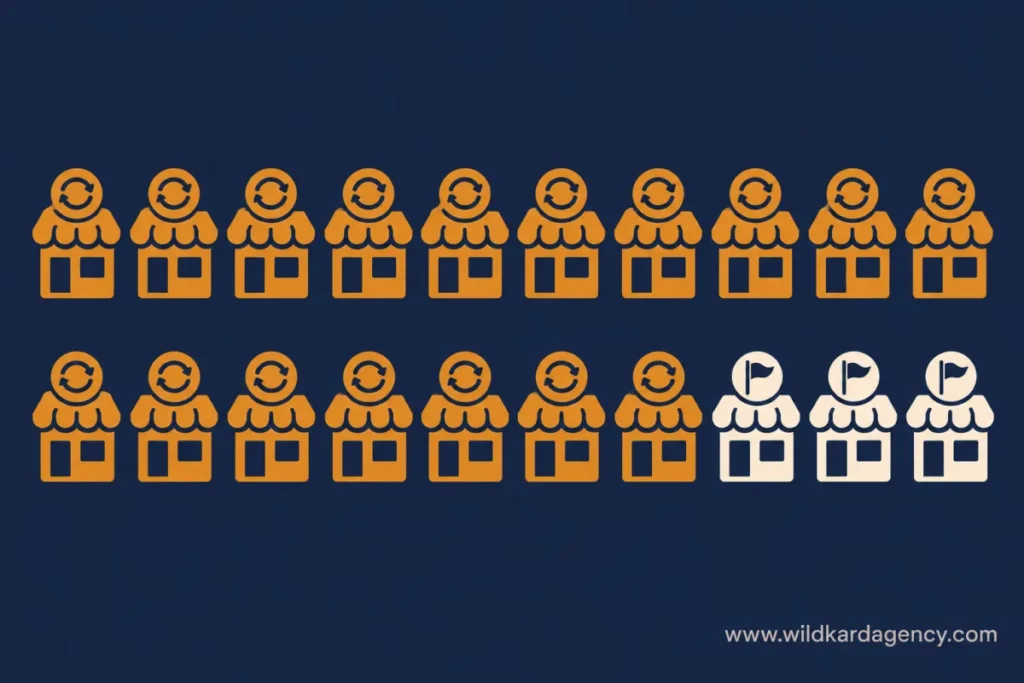
That preference makes sense for the agency. Recurring revenue is easier to plan around, and a client who stays is cheaper than a new one. You’ll see it in agency blogs, where one concludes it would always choose retainer work as the superior form of support.
None of that makes retainers a bad deal. It means the default recommendation comes from the party that benefits from the default. Your job is to test the recommendation against your own work, and the next section gives you the test.
Match the Contract to the Shape of the Work
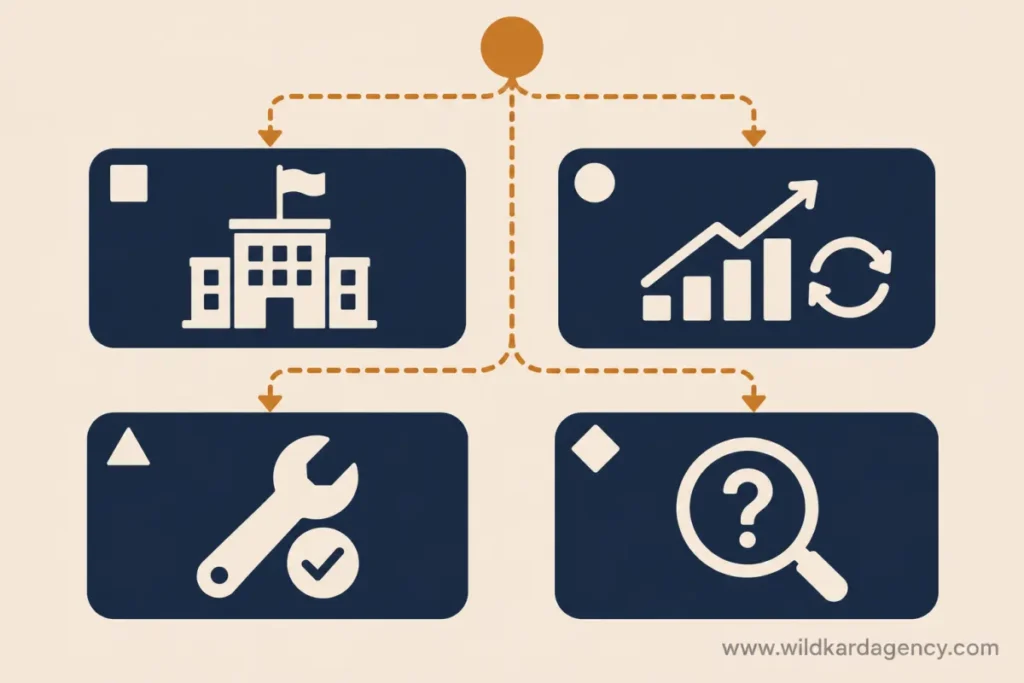
Ask one question about any piece of work: when it’s done, what exists? The answer sorts it into one of four shapes, and each shape has a natural contract.
| What exists when “done” | Typical work | Natural contract | Watch out for |
| A finished thing | Website build, brand identity, audit, migration | Fixed-price project with milestones | Nobody owns results after launch. |
| A better number than last month | SEO, content, paid ads, email | Monthly retainer with named deliverables | Paying for activity, not progress. |
| Nothing broke | Updates, fixes, hosting, small edits | Small maintenance retainer or a block of hours | Unused hours, vague scope. |
| I don’t know yet | Unclear problem, no baseline | Small paid diagnosis project | Committing before you know the work. |
Most disputes between owners and agencies come from a mismatch between the shape and the contract. Buy a loop as a project, and the work stops the day the invoice is paid. Buy a finished thing on a retainer, and you pay month after month for something that should have an end.
Digital marketing is often the loop kind. Clutch’s pricing guide notes that it’s usually an ongoing effort without a set end date, since brands need steady content and visibility. That’s why retainers fit marketing so often, but a website build inside the same engagement is still a finished thing.
The fourth row matters most for new buyers. If you can’t describe the finished state, don’t sign anything long. Pay for a small, fixed-scope diagnosis, and let it tell you which shape you actually have.
Project Based Pricing: Where It Wins and Where It Quietly Fails
Project based pricing works because everything is bounded. You know the price, the deliverables, and roughly the date. Comparing three quotes is easy when each describes the same finished thing.
It’s also the lower-commitment way to meet an agency. Projects reviewed on Clutch most often fall between $10,000 and $49,999, with smaller ones under $10,000, while 54% of agencies in SparkToro’s survey charge $1,000 to $10,000 for one-off work. The two figures come from different samples, so read them as a range of what’s out there, not a price list.
Where it fails is after delivery. A website launches, the project closes, and nobody is paid to watch whether it converts. If you’re planning a build, how long a website takes and which platform fits are worth settling before you sign, because a project price assumes both.
Two other failures are quieter. A fixed price tempts some agencies to cut corners as hours run out. And every change you ask for mid-project turns into an extra charge, which brings us to the next problem.
Put a post-launch window in every project quote: 30 to 60 days of fixes and questions at no extra charge, plus a written handover of logins and files. That’s WildKard’s suggestion, not an industry rule, and it closes the cliff.
What a Monthly Retainer Should Actually Include

A monthly retainer without named deliverables is a subscription to hope. You pay every month, and nobody can say what you bought. Insist on these seven items in writing.
| Retainer term | What to write | Why it matters |
| Named monthly deliverables | For example: four articles, two page fixes, one report. | “Ongoing support” can’t be audited. |
| A capacity limit | Hours or deliverable count per month. | Stops silent overload and silent underuse. |
| An unused-work rule | Whether unused work rolls over, expires, or gets credited. | Otherwise you pay for work nobody did. |
| A change rule | New requests swap with an existing item or wait until next month. | Keeps scope creep visible. |
| Response times | How fast they answer and how fast they fix urgent problems. | Sets expectations before there’s a problem. |
| Reporting | Monthly, from your own analytics, tied to your goal. | You can verify what you’re told. |
| Term and exit | Short initial term, then notice. Handover on exit. | Caps your risk if it isn’t working. |
On price, small-business retainers cluster lower than many guides suggest. In SparkToro’s survey, 86% of agencies reported an average retainer of $10,000 a month or less, with 49% between $1,000 and $5,000 and 31% between $5,000 and $10,000.
Clutch puts typical digital marketing spend at $5,000 to $50,000 a month across agencies of every size worldwide, and adds that ad spend is billed separately and should get its own budget line. Treat Clutch’s range as the outer frame and SparkToro’s bands as the realistic neighborhood for a small business.
Agency Retainer Cost vs Project Cost: Compare Them Over 12 Months
A monthly price and a one-time price can’t be compared directly, which is why comparing them feels like a trick. Convert both to the same unit: what you’ll pay over twelve months to get the outcome you want.
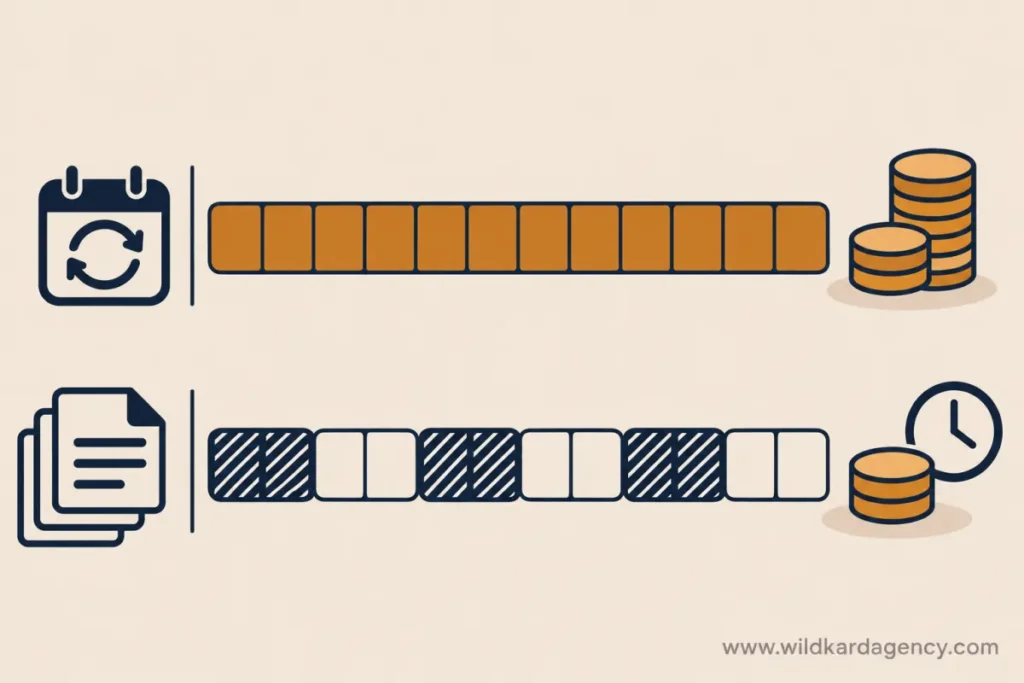
For a project, add four things: the project fee, any post-launch support you’ll need, a realistic allowance for change requests, and your own time for re-briefing every time you start something new. For a retainer, multiply the monthly fee by the months you’d actually keep it, then add setup if it’s charged.
Here’s a hypothetical to show the method. These are illustrative figures to demonstrate the arithmetic, not market prices. Say you need steady content for a year.
| Line | Three separate projects | One monthly retainer |
| Fees | 3 projects x $4,000 = $12,000 | $1,500 x 12 months = $18,000 |
| Months with no content | About 6 (gaps between projects) | 0 |
| Your re-briefing time | 3 x 6 hours = 18 hours | 6 hours once |
| Change requests | Billed separately, say $600 | Absorbed within the monthly scope |
| 12-month total | $12,600 plus 18 hours of your time | $18,000 plus 6 hours of your time |
On fees and change requests, the projects win by $5,400. But the retainer buys six more months of continuous output and 12 fewer hours of your time. Whether that’s worth $5,400 depends on how compounding your channel is. For content that earns traffic over time, it often is, and our guide to a lead-generating content strategy explains why consistency matters.
Now flip the example. If the same $18,000 bought a one-time brand identity, the retainer would be the wrong contract, because the work ends. The agency retainer cost looks fair only when the work is a loop. Run this table with your own numbers before you decide.
Scope Creep: How Each Model Fails Differently
Scope creep is the shared enemy, but it shows up differently in each model. In a project, it arrives as “can you also add…?” and becomes a change order. In a retainer, it arrives as small favors that eat the month’s capacity until the planned work slips.
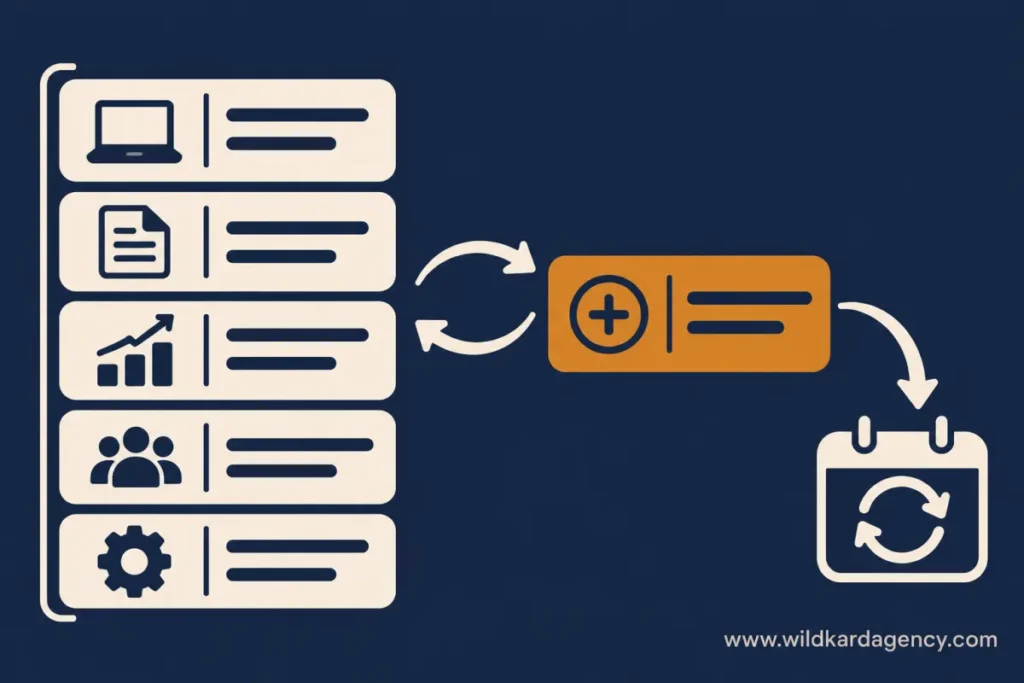
A change rule handles both. For projects, require a written change request with a price and date impact before any extra work starts. For retainers, use a swap rule: a new request replaces something on the list, or it waits for next month.
Add three more controls. Count revision rounds in the contract, such as two rounds per deliverable. Define acceptance criteria as yes-or-no checks, like the finish-line checks in a handoff brief. And ask for a shared monthly ledger showing what was delivered against what was promised.
Underuse is the retainer’s version of scope creep in reverse. If you’re paying for ten deliverables and getting six, you want to know in month two, not month eight. The ledger catches that too.
| GET A SECOND READ ON A PROPOSALHolding a proposal you can’t quite read? Contact the WildKard team and send it over. We’ll tell you which shape the work is and which terms are missing. WildKard is an agency, so weigh that advice the way you’d weigh any agency’s. |
When to Switch From Project to Retainer (and Back)
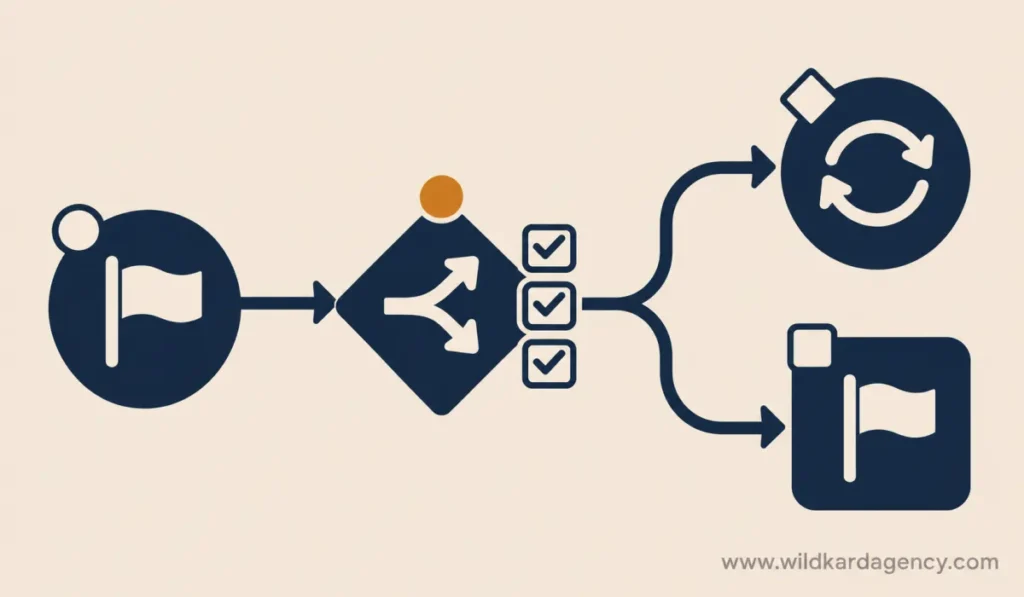
The cleanest answer to retainer vs project based agency is often both, in order. Start with a bounded project that produces something real: an audit, a foundation, a first batch of content. Then decide whether to continue.
Switch from project to retainer when three things are true. The project produced a measurable signal worth building on. You have a backlog of work that would take months to clear. And you’d otherwise re-hire the same agency for the same work, repeatedly.
Switch from retainer back to projects, or pause, when you see the opposite signs: two months of unused capacity, reports that don’t lead to decisions, or a backlog that’s nearly empty. A retainer should shrink or end when the loop has run out of work.
Be careful about when you judge. Google’s own SEO guide says some changes take effect in a few hours and others take several months, and it suggests waiting a few weeks before assessing whether your work had a beneficial effect. So a month-three review should check delivery and early signals, not leads. Our guide to ranking timelines shows which signals appear first.
Keep the first commitment short, too. In an inTandem survey of 500 US small business owners, 40% of SMBs that outsource marketing churn, and 56% of those leave within 6 to 12 months. A three-month initial term, then 30 days’ notice, gives both sides time to see signals without locking you in. That’s WildKard’s view, not an industry rule.
Four Questions That Show Whether a Proposal Fits Your Work
Before you read a single contract clause, put four questions to each agency. The answers tell you whether the proposal was written for your work or copied from a template.
1. “What exists at the end of month one, and who owns it?”
A good answer names a deliverable you could open: a page, a report, a set of fixes. A weak answer talks about “onboarding” and “discovery” with nothing you can inspect.
2. “What would you stop doing if the work ran out?”
A retainer should shrink or end when the backlog does. An agency that has thought about that will name the signal. One that hasn’t will tell you the work is never finished.
3. “What do I keep if I stop paying next month?”
Published pages, fixed settings, and documented work stay with you if the contract assigns them to you. Anything held only in the agency’s accounts or tools doesn’t. This question exposes ownership gaps faster than any clause review.
4. “How do you price a change in the middle?”
You want a number and a process: a written request, a price, a date impact, and your approval before work starts. “We’re flexible” sounds friendly and hides the next surprise invoice.
Write the answers beside each proposal. When one agency answers all four in specifics, the retainer vs project based agency question usually settles itself, because you can see which contract the work actually needs.
Contract Terms for Each Model, Side by Side
Whichever you choose, these terms belong in writing. Notice how the same item changes shape between the two models.
| Term | Project contract | Retainer contract |
| Payment | Milestones tied to delivered work, not the calendar. | Monthly, after the month’s deliverables are listed. |
| Scope | Deliverables and acceptance checks for each milestone. | Named monthly deliverables and a capacity limit. |
| Changes | Written change request with price and date impact. | Swap rule: replace an item or wait a month. |
| Revisions | A stated number of rounds per deliverable. | Rounds count against monthly capacity. |
| After delivery | 30 to 60 days of fixes, then written handover. | A review at month three, then a renewal decision. |
| Ownership | Signed assignment of rights once paid. Accounts in your name. | Same, and ownership covers each month’s work. |
| Exit | Termination for missed milestones, with files delivered. | 30 days’ notice after the initial term, with handover of logins and files. |
Two ownership points deserve a line of detail. Under Google Ads Help rules, an ad account created from an agency’s manager account is owned by that manager, so create accounts yourself and let the agency link in. And per the Copyright Office’s Circular 30, work by an independent contractor is made for hire only if it fits one of nine categories and a signed agreement says so, so ask for a written assignment.
Have a lawyer read the final wording for your state. This is general information, not legal advice.
How WildKard Thinks About This Choice
WildKard is an agency, and the survey above says most agencies prefer retainers. So you should know where that leaves us: we benefit from recurring work, and you should discount our advice accordingly.
Here’s the practical test we hold ourselves to. Every article we produce ships as defined parts, with a separate image brief and a quality-check log. That’s what a named deliverable looks like. If an agency can’t describe its monthly output that precisely, the retainer is vague, whoever sells it.
The same test applies to us. Ask any agency, including WildKard, to list next month’s deliverables on one page before you sign.
Retainer and Project Mistakes That Cost Owners Money
- Buying a loop as a project. The work stops at delivery, and results decay while nobody watches them.
- Buying a finished thing on a retainer. You pay monthly for work that should end.
- Comparing monthly and one-time prices directly. Convert both to twelve-month totals first.
- Signing a retainer with no named deliverables. You can’t audit “ongoing support.”
- Skipping the unused-work rule. Unused capacity quietly becomes the agency’s revenue.
- Judging a loop channel at week four. Early signals matter first, as the ranking timelines guide explains.
- Accepting a long term before any pilot. A short initial term is cheap insurance.
- Forgetting the handover. Accounts and files should be yours whichever model you choose.
The Retainer vs Project Checklist to Print Before You Sign
Use this as a scorecard for retainer vs project based agency decisions so you don’t rely on memory. Each unchecked box is a question for the agency.
Decide the shape
☐ I can say what exists when the work is done: a thing, a better number, nothing broken, or I don’t know yet.
☐ If I don’t know yet, I’m buying a small fixed-price diagnosis first.
☐ I’ve matched the shape to the contract: project, retainer, maintenance, or diagnosis.
Compare the money
☐ I converted both quotes to a twelve-month total.
☐ I included post-launch support, change requests, and my own re-briefing time.
☐ Ad spend and tool costs are separate lines I’ve budgeted.
Retainer terms
☐ Monthly deliverables are named and capped.
☐ Unused work has a rule: roll over, expire, or credit.
☐ The initial term is short and notice afterward is 30 days or less.
Project terms
☐ Payments tie to milestones and acceptance checks.
☐ Revision rounds are counted.
☐ A 30 to 60 day post-launch window and written handover are included.
Both
☐ A change rule exists: written request, or swap an item.
☐ Accounts are in my name and the contract assigns the work to me once paid.
☐ A month-three review is on the calendar.
Questions Owners Ask About Retainers and Projects
Is a retainer or a project better for a small business?
Choose by the shape of the work. A project suits a finished thing like a website or brand identity. A retainer suits a loop that improves with repetition, like SEO or content. If you can’t describe the finished state yet, buy a small fixed-price diagnosis before committing to either.
How much does a monthly retainer cost?
In SparkToro’s 2025 agency survey, 86% of agencies reported average retainers of $10,000 a month or less, and 49% fell between $1,000 and $5,000. Clutch lists $5,000 to $50,000 across all agency sizes. Ad spend is usually billed separately, so budget it on its own line.
Can I start with a project and move to a retainer?
Yes, and it’s often the safest path. Start with a bounded project that produces a measurable result. Switch when that result is worth building on, a backlog of months of work exists, and you’d otherwise rehire the same agency repeatedly. Agree the switch triggers in the project contract.
What happens to unused retainer hours?
That depends on the contract, so ask before signing. Some agencies let unused work roll over for a month, some let it expire, and some credit it. Get the rule in writing, and ask for a monthly ledger showing delivered work against what was promised.
How long should a retainer commitment be?
Start with three months, then 30 days’ notice. That’s WildKard’s view, not an industry rule. Search and content work need months to show signals, so one month is too short to judge. inTandem found 40% of small businesses that outsource marketing churn, so a short initial term limits your risk.
Pick the Contract That Fits the Work

Retainer vs project based agency isn’t a contest between two pricing models. It’s a question of whether your work ends or repeats, and a contract that matches the answer protects both sides.
Before your next call, write one sentence describing what exists when the work is done. Then convert every quote to twelve months, and ask for the terms in the checklist above. Most of the decision will be made before anyone mentions a discount.
If you’d like help reading a proposal, reach out through the contact page and tell us what you’re trying to achieve.