
The website elements that actually earn customers now that ChatGPT, Perplexity, and Google AI Overviews decide who gets found first.
Most small business websites were built to satisfy Google. That’s no longer the whole assignment. A meaningful share of the people who might hire you never touch a search results page at all: they ask ChatGPT, Perplexity, or Google’s AI Overview, and the answer either includes your business or it doesn’t.
Knowing what should a small business website include in 2026 now means building for two audiences at once: human visitors, and the AI systems increasingly deciding which humans ever see you.
That’s not a reason to rebuild from scratch. Most of what already makes a website good, fast, clear, mobile-friendly, still matters. What’s changed is a smaller set of elements that determine whether an AI system trusts your site enough to cite it, and most small business sites are missing several of them without knowing it.
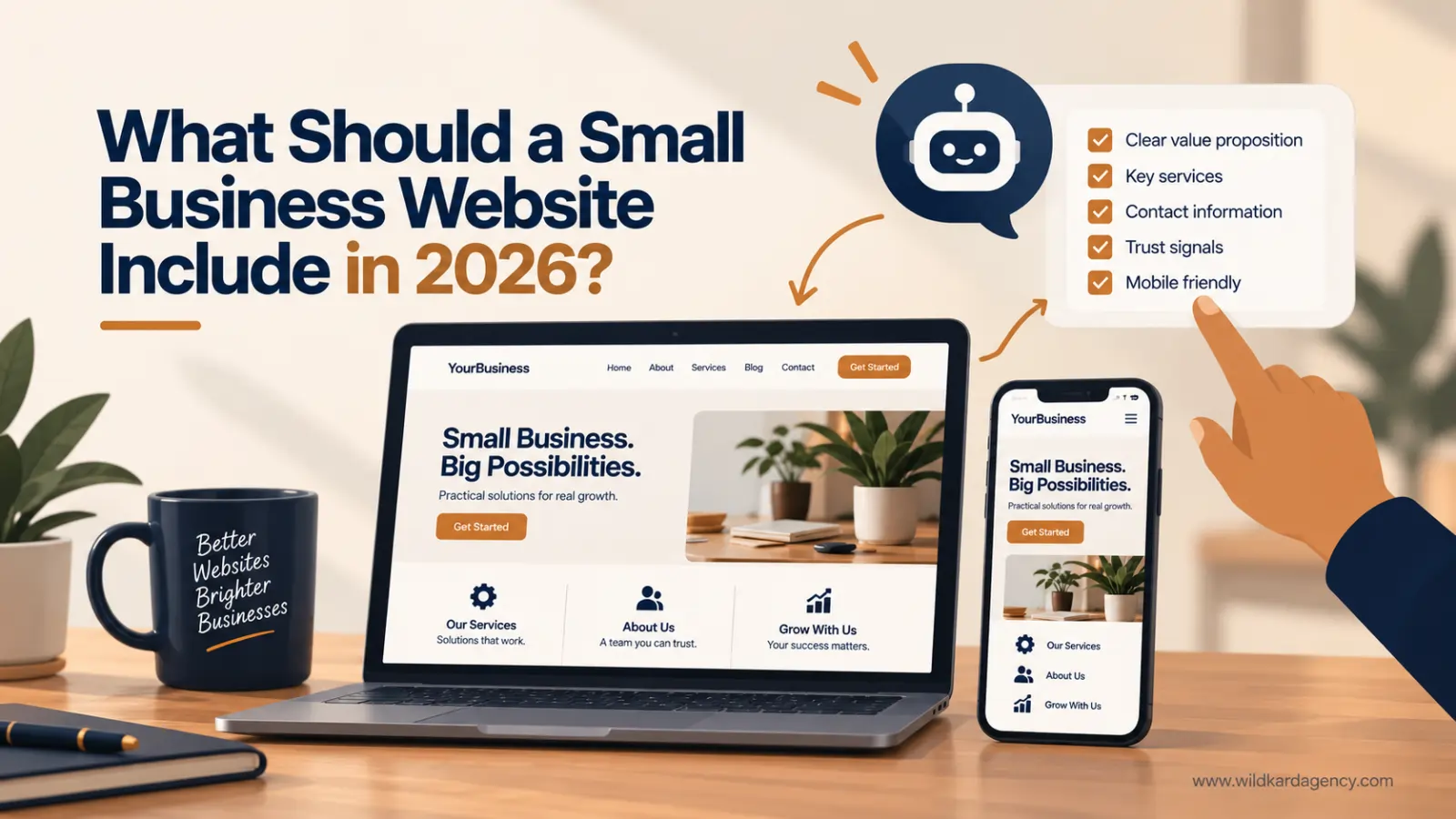
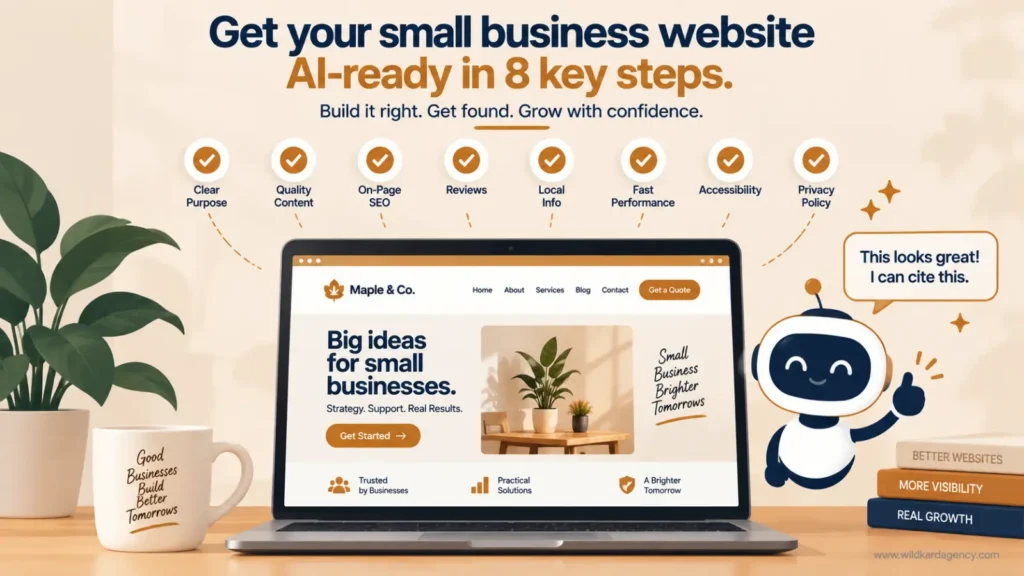
The short answer: a 2026-ready small business website needs eight things working together: mobile-first speed, an answer near the top of the page instead of the bottom, visible and current reviews, one consistent business identity everywhere it appears online, content on a real update schedule, a low-friction way to ask a question outside business hours, baseline structured data, and basic accessibility and legal compliance. Skip more than one or two of these and you’re invisible, or exposed, in ways that are easy to miss until it’s expensive.
Picture a local HVAC company with a five-year-old website, a strong reputation, and forty genuine five-star reviews sitting on Google that never made it onto the site itself. Their rankings look fine. Their phone has gone quieter anyway.
A prospective customer asks ChatGPT for a reliable HVAC company nearby. The AI system has no visible reviews to point to on the company’s own pages, no recently updated content to draw from, and an opening paragraph on the homepage that spends three sentences on company history before mentioning what they actually repair. A competitor with half the reputation but a page built around these eight elements gets named instead.
Nothing about the first company’s service declined. Their website simply stopped being legible to the system now doing some of the recommending. The fix, in this case, would have taken an afternoon, not a rebuild.
Why This List Looks Different Than It Did Two Years Ago
Two years ago, a good small business website answered to one reader: Google’s crawler, and eventually a human. In 2026, a large and fast-growing share of local searches happen inside an AI conversation instead. According to one industry analysis, 45% of consumers now use ChatGPT or similar tools to find local businesses, up from just 6% a year earlier.
A website built only for Google is quietly missing that entire channel. The eight elements below are what determine whether you’re part of it.
The scale of the shift is bigger than most owners realize. An Ahrefs analysis of 300,000 keywords found AI Overviews reduce click-through rates by roughly 34.5%, even when a page’s ranking position doesn’t move at all. Fewer people click through from the search page than they used to, full stop.
That makes the difference between being cited inside an AI answer and merely ranking below it larger than it’s ever been. A page that ranks well but never gets pulled into the summary is competing for a shrinking slice of attention.
None of them require abandoning traditional SEO. Backlinks, technical health, and solid on-page structure still matter, and AI Overviews still favor content that already ranks well in the classic results. The eight elements below sit on top of that foundation, not instead of it, and none of them require a developer to implement.
What a Small Business Website Should Include in 2026
These are additions to conversion fundamentals, not replacements for them. If your site is still missing basics like a clear call to action or a fast-loading homepage, start there first before layering AI-readiness on top.
Mobile-First Speed, Still Non-Negotiable
This one hasn’t changed, it’s just become less optional. Google ranks based on the mobile-first indexing version of your site, and more than half of all web traffic is mobile.

A slow, clunky mobile experience costs sales directly, independent of any ranking impact. If a visitor arrives from an AI answer and the page takes five seconds to load, that friction works against you before they’ve read a word.
Test it the simple way: open your own homepage on your phone over a mediocre connection, not office WiFi. If you find yourself waiting, so is everyone else, and most of them won’t.
An Answer in the First Few Sentences, Not the Last
Old web copywriting habit: build the case, add context, then land the point near the bottom. That habit now actively hurts you. One 2026 analysis found roughly 44% of AI citations come from the first 30% of a page’s text.
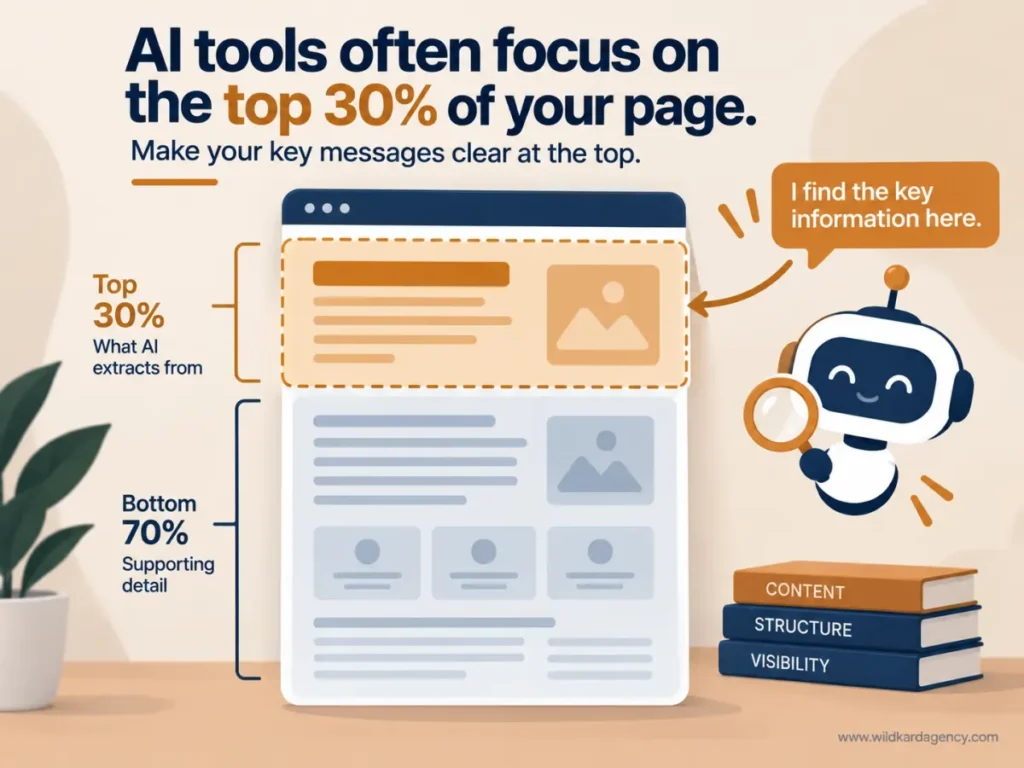
AI systems extract from the top of the page far more than the bottom. Put the direct answer to the reader’s question in the opening two or three sentences of every important page, then use the rest of the page to support it.
This is the same discipline good FAQ writing already requires: state the answer plainly first, then explain the reasoning. Pages that make a reader (or an AI system) scroll to find the point are pages that don’t get cited.
Reviews Where an AI (and a Human) Can Actually See Them
This is the most surprising element on the list. Brands with no visible review profile have a median AI citation rate of about 1%. Brands with even a small profile, as few as 1 to 13 reviews, jump to roughly 53.5%.
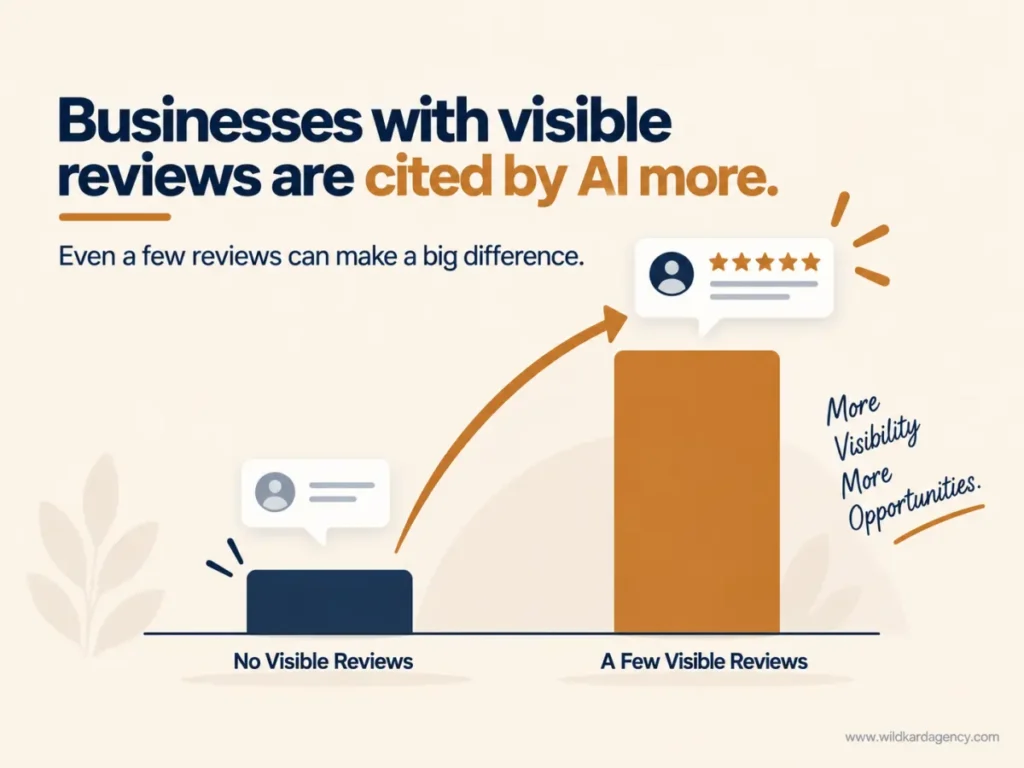
Reviews now function as a machine-readable trust signal, not just a human one. Embed live reviews on the page itself rather than a handful of static quotes pasted in once and forgotten.
The gap between zero reviews and a handful of them is doing almost all the work here. You don’t need hundreds. You need enough, visible in the right place, to prove a real business with real customers is behind the page.
One Consistent Business Identity, Everywhere
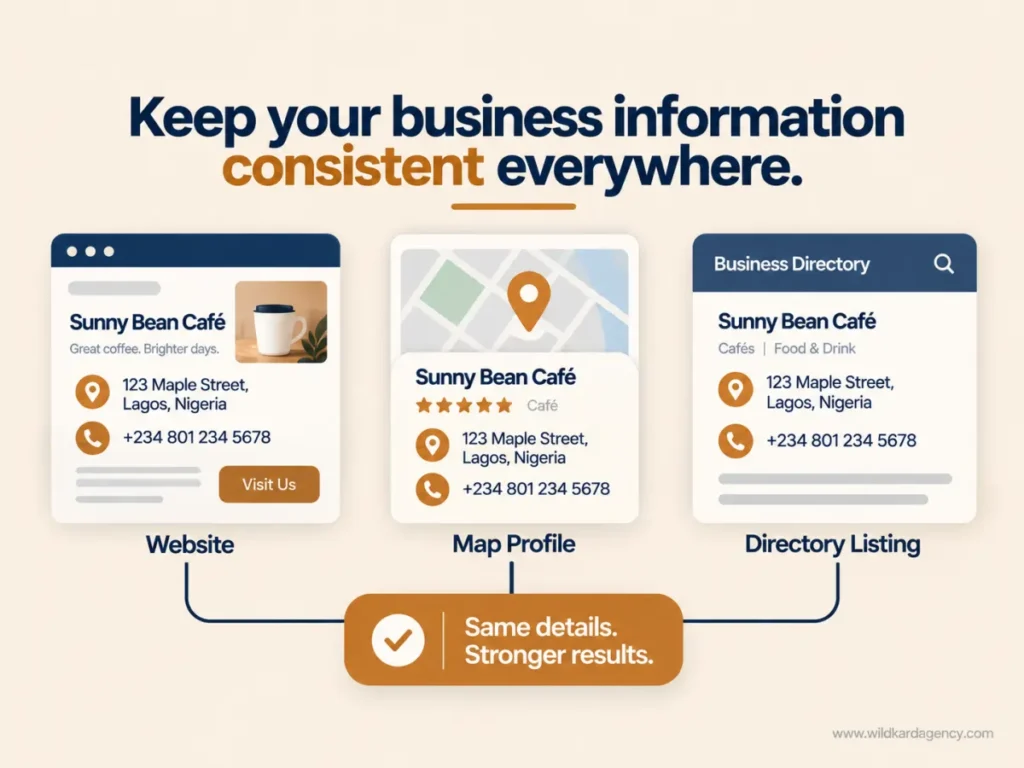
Your business name, address, and phone number need to match exactly across your website, Google Business Profile, and every directory listing. Even small discrepancies quietly weaken both local search performance and AI confidence in who you actually are.
An AI system deciding whether to recommend your business is more likely to do so when it can describe you the same way everywhere it looks. Inconsistency reads as risk, and AI systems default away from risk.
Check the obvious places first: your website footer, your Google Business Profile, your Facebook page, and any directory listing you signed up for years ago and forgot about. A single mismatched suite number is a small thing that adds up across a dozen listings.
Content on a Real Update Schedule
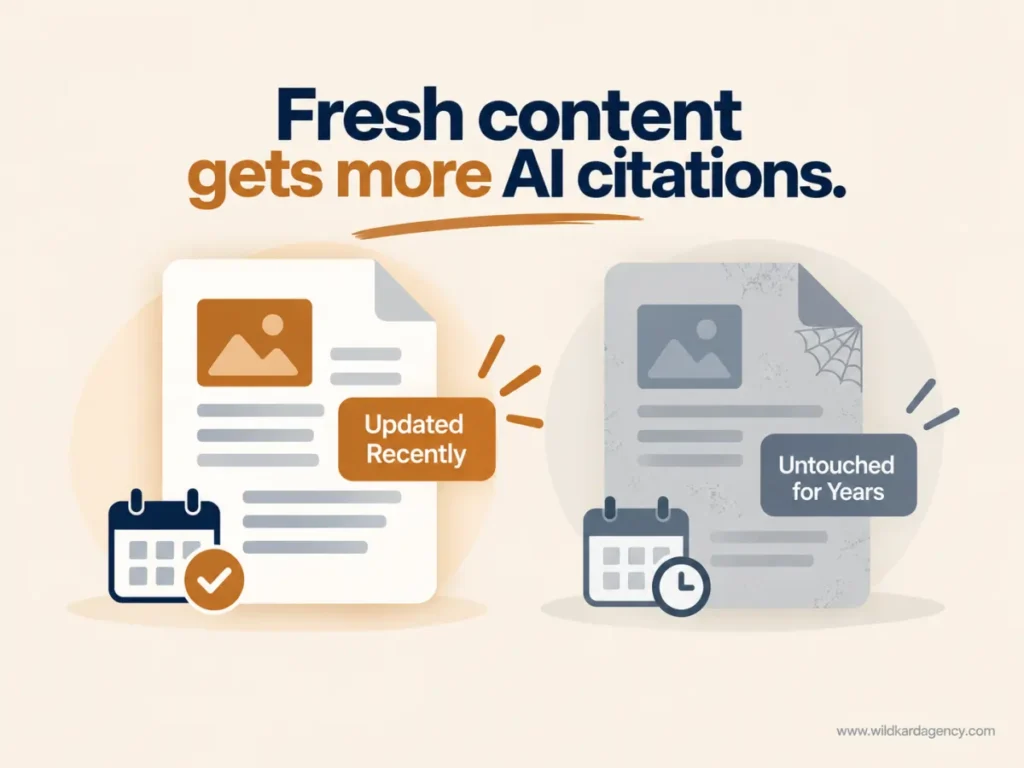
A page published once in 2023 and never touched again is quietly losing ground, even if nothing on it is factually wrong. The same 2026 analysis found pages updated within two months earn about 28% more AI citations than older, untouched pages.
This doesn’t mean rewriting everything constantly. It means picking a real cadence, quarterly at minimum for your most important pages, and actually keeping it.
A simple system beats a good intention. A recurring calendar reminder to review your five highest-traffic pages does more for AI visibility than an ambitious content plan that quietly stalls after the second month.
A Way to Ask a Question Without Waiting for Business Hours
Visitors who arrive from an AI search convert at meaningfully higher rates than average organic traffic, with one estimate putting AI-referred conversion around 3.5%. Many of them are researching outside your business hours, exactly when a phone call isn’t an option.
A simple chat widget, even a basic one that answers FAQs and books a callback, captures visitors who would otherwise leave rather than fill out a form or wait.
This matters most for the exact moment someone is comparing you against a competitor at 9pm. Whoever answers first, even with an automated response that books a real conversation for the morning, often wins the inquiry.
Structured Data, Without Pretending It’s Magic
Here’s the position most agencies won’t take because it undercuts their own upsell: schema markup is worth having, but it is not the AI-visibility lever it’s often sold as. One 2026 analysis found adding schema produced no major uplift in citations across AI Overviews, AI Mode, and ChatGPT on its own.
It still matters for rich results and structured-data hygiene, and a blocked or misconfigured robots.txt file can quietly keep both search engines and AI crawlers out entirely. Just don’t let anyone sell it to you as the single fix for a visibility problem that’s actually about content and trust signals.
Get the basics right, Organization, LocalBusiness, and FAQ schema where relevant, confirm robots.txt isn’t blocking anything important, and move your real effort toward the six elements above it. That’s where the actual visibility gain lives.
Think of it the way you’d think of a business license on the wall. Necessary, expected, and not what actually earns anyone’s trust once they walk through the door.
Accessibility and Basic Legal Pages, the Element Most Guides Skip
This is the one almost every “website checklist” article leaves out, and it carries real financial risk, not just a missed opportunity. ADA compliance for small business websites is not optional the way most owners assume. There is no small business exemption under ADA Title III, and UsableNet’s 2025 research found 64% of sued companies had annual revenue under $25 million.
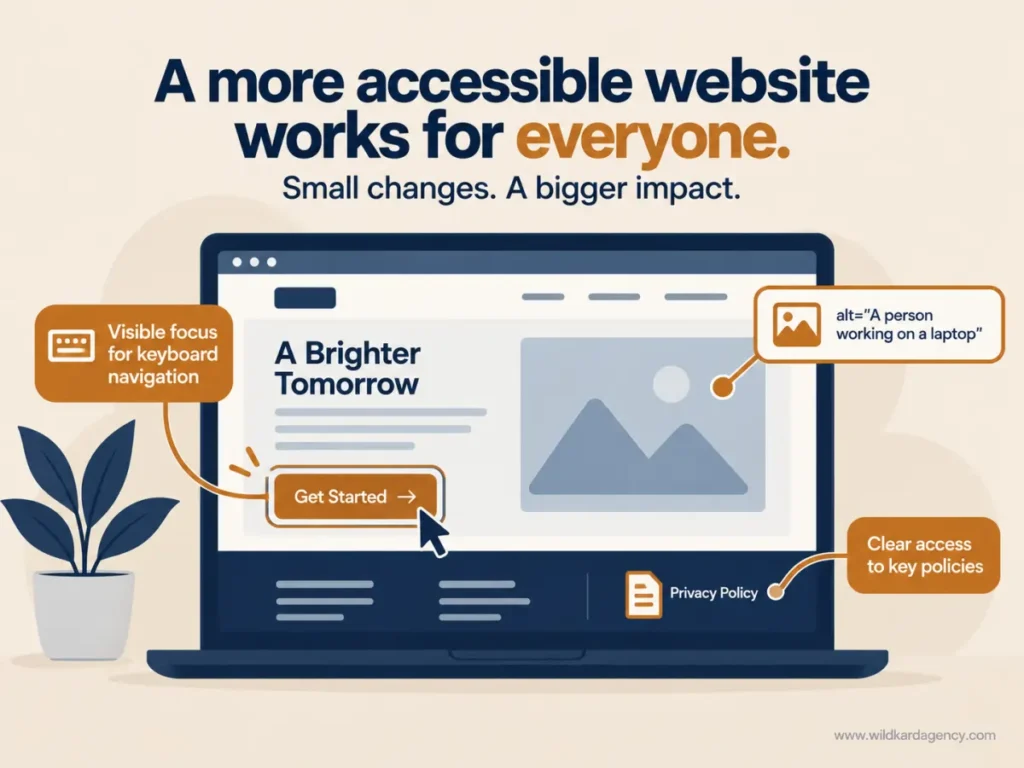
Courts have no single binding statute naming a technical standard, but they consistently point to WCAG 2.1 or 2.2 Level AA when evaluating claims. Demand letters commonly settle for $5,000 to $25,000, before you’ve even paid to fix the underlying problem.
The practical fixes are ordinary: sufficient color contrast, alt text on images, a site that works with keyboard navigation alone, and captions on video. None of it requires a full rebuild, and most of it overlaps with basics a good developer should already be doing.
Separately, if your site collects a name, email, or any other data through a contact form, analytics, or cookies, most states now expect a real privacy policy requirement to be met, not a recycled template copied from another business’s site. Neither of these is legal advice, but both are worth a real conversation with someone qualified before you assume an old template covers you.
If you’re checking your own site against this list and finding gaps, reach out and we’ll walk through which ones would move the needle first for your specific business.
If You Can Only Fix One Thing This Month
Not every business has the time or budget to tackle all eight at once. If you have to prioritize, the order below reflects effort versus payoff, cheapest and fastest first.
- Start with reviews. Embedding an existing review feed on your site is a configuration change, not a redesign, and it’s the single element with the largest documented swing in AI citation rate.
- Then fix your opening paragraphs. Rewriting the first two or three sentences of your five most important pages is a writing task, not a development project, and it directly targets the 30%-of-text citation pattern.
- Then audit your NAP consistency. An hour spent checking your name, address, and phone number across your website, Google Business Profile, and top directories catches a problem that otherwise compounds silently for years.
- Save the update-cadence habit and the chat widget for last. Both matter, but both are ongoing commitments rather than one-time fixes, so they’re easier to sustain once the higher-impact items are already handled.
- Treat schema and robots.txt as a quick technical check, not a project. Confirm they’re not broken, then stop spending further budget there until the content and trust-signal work above is done.
- Do a basic accessibility pass early, not last. A contrast and keyboard-navigation check is cheap now and far cheaper than a demand letter later, and it doesn’t depend on any of the other fixes being done first.
This order isn’t universal. A business with an active five-star reputation but a robots.txt file accidentally blocking its blog should fix the technical issue first, since it’s currently invisible regardless of how good the content is. Use the list as a starting point, not a rigid sequence.
Whatever order you tackle these in, track something before and after. Even a rough count of monthly inquiries, checked before the fixes and again eight to ten weeks later, tells you more than any ranking dashboard about whether the changes actually worked. That single number is usually all the proof a busy owner needs to keep going.
The Website Mistakes That Undo All of This
A site can have every element above and still underperform if it’s assembled carelessly. The failures repeat in a small, predictable set:
- Treating schema as a fix for weak content. Structured data describes what’s on the page. It can’t invent trust or clarity that isn’t already there.
- No reviews displayed anywhere on the actual site. A five-star profile on a third-party platform doesn’t help if nothing on your own pages reflects it.
- Content frozen since launch. A page that hasn’t changed in two years signals staleness to AI systems even when the information is still accurate.
- Burying the answer under a marketing introduction. Three paragraphs of scene-setting before the actual point pushes the answer past where AI systems are extracting from.
- Building only for Google and ignoring AI referral traffic. A site that ranks well but converts AI-referred visitors poorly is leaving a fast-growing channel on the table.
- Assuming size is protection from an ADA demand letter. It isn’t. Most sued businesses are small, precisely because small sites tend to have the most gaps and settle the fastest.
These mistakes tend to travel together. A business that hasn’t touched its content in two years is usually also the one with no reviews displayed and an answer buried under three paragraphs of introduction. Fixing the content-freshness habit tends to force the other fixes into the open at the same time.
WildKard builds every new client site with these eight elements as the starting baseline, not an add-on package priced separately later. A site built without them in 2026 is a site that needs revisiting within months, which usually costs more than building it right the first time.
Small Business Website Checklist for 2026
Run your current site against this list. Two or fewer checked items means the gaps are costing you more than you’d guess.
- Speed and mobile. The site loads quickly and works cleanly on a phone over an average connection, not just a desktop monitor on office WiFi.
- Direct answers. The most important pages answer the reader’s core question in the opening two or three sentences, before any scene-setting.
- Reviews on-site. Live customer reviews are visible somewhere on the site itself, not just on a third-party profile the visitor has to go find.
- Consistent identity. Business name, address, and phone number match exactly across the website, Google Business Profile, and every directory listing still active.
- Fresh content. Key pages have been meaningfully updated within the last two to three months, not just touched cosmetically.
- Low-friction contact. There’s a chat widget or an equally easy way to ask a question and get a response after hours.
- Clean technical basics. Basic schema markup is in place, and robots.txt isn’t accidentally blocking crawlers from anything that matters.
- Accessibility and legal pages. The site meets basic WCAG contrast and keyboard-navigation standards, and a real privacy policy covers any data collected through forms or analytics.
None of these eight elements is expensive or exotic on its own. What’s expensive is discovering all of them are missing at once, after a competitor with a weaker offer starts showing up in the AI answers you should own.
A quarterly ten-minute audit against this list, treated the same way you’d treat checking your business bank balance, catches drift long before it turns into a quiet, unexplained drop in inquiries.
Frequently Asked Questions
What should a small business website include in 2026?
Seven things working together: mobile-first speed, an answer near the top of each page, visible current reviews, one consistent business identity everywhere, content on a real update schedule, a low-friction way to ask questions after hours, and baseline structured data.
Does my website need schema markup for AI search?
It’s worth having for rich results and structured-data hygiene, but recent analysis found it doesn’t meaningfully boost AI citations on its own. Treat it as a baseline, not a fix for weak content or missing trust signals.
How many reviews does a small business need for AI visibility?
Surprisingly few. Sites with even 1 to 13 visible reviews show a dramatically higher AI citation rate than sites with none at all. The presence of reviews matters more than the exact count.
How often should I update my website content?
At least quarterly for your most important pages. Content updated within the last two months earns meaningfully more AI citations than older, untouched pages, even when the older content is still accurate.
Do I need a chat widget on my website?
Not strictly required, but it closes a real gap. Many visitors research outside business hours, and a simple chat option captures people who won’t wait for a callback or fill out a long form.
Is mobile-first design still important in 2026?
Yes, more than ever. Google indexes the mobile version of your site first, and a slow or broken mobile experience costs sales directly, independent of any ranking effect.
Will rebuilding my website help me show up in ChatGPT?
It can, if the rebuild addresses the right things: clear answers near the top of pages, visible reviews, consistent identity, and fresh content. A redesign that only changes visuals won’t move AI visibility on its own.
How much does it cost to make an existing website AI-search ready?
Often less than a full rebuild. Adding visible reviews, tightening opening paragraphs, fixing NAP consistency, and setting an update schedule are content and configuration fixes, not a redesign, and can usually be done against an existing site.
Should I rebuild my whole site or just fix a few things?
Audit against the checklist above first. If you’re missing one or two elements, targeted fixes are faster and cheaper. If you’re missing most of them, or the underlying design is also outdated, a rebuild addresses both problems at once instead of patching around a weak foundation.
Does my small business website need to be ADA-compliant?
Effectively yes. There’s no small business exemption under ADA Title III, and most sued companies have revenue under $25 million. Courts generally look to WCAG 2.1 or 2.2 Level AA, and this isn’t legal advice, so confirm your specific exposure with someone qualified.
If your site is missing more of these than you expected, reach out and we’ll help you figure out which fixes matter most before you spend on a full rebuild. Getting a clear answer to what should a small business website include in 2026 matters less than actually closing the gaps once you know them.