

“A few weeks.” “About a month.” “It depends.” Ask five agencies how long to build a website and you’ll get five different answers, and most of them are optimistic guesses made to win the project, not real estimates.
Here’s the honest version: for most small business websites, how long to build a website comes down to two separate numbers, the time the build actually takes, and the time the whole project takes once real life gets involved. Those two numbers are rarely the same, and the gap between them is where most of the frustration lives.
The Real Range: What a Website Actually Takes
According to Elementor’s breakdown of website timelines by build type, a simple DIY site using a modern builder can go live in a day or two. A custom small business site built by a freelancer or agency typically takes four to eight weeks. A larger site with custom functionality, e-commerce, or extensive content can run several months.
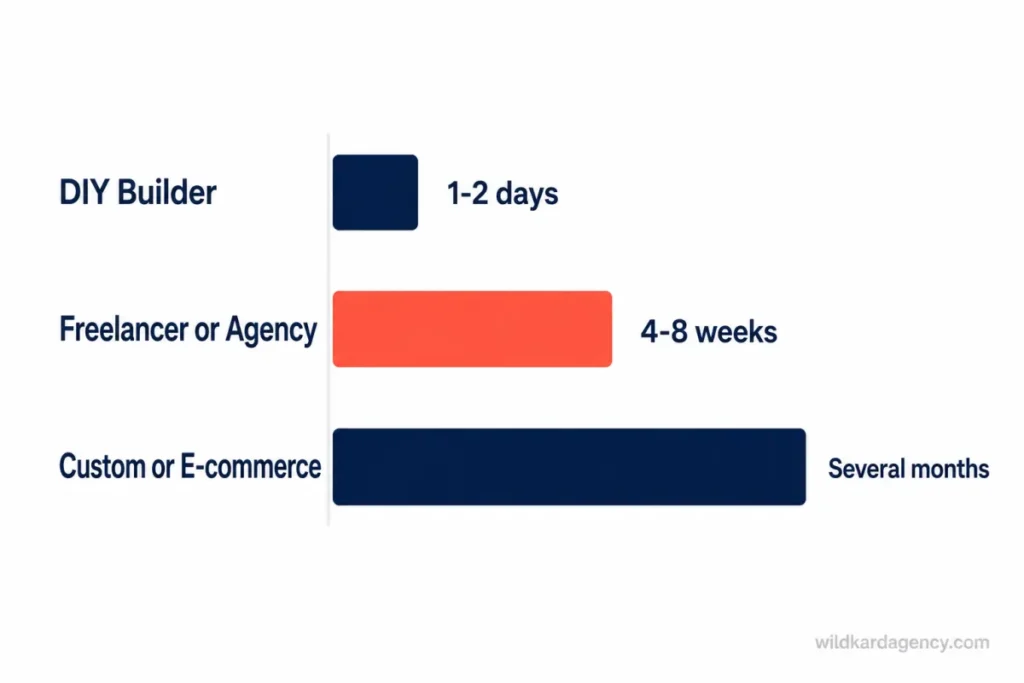
That range is wide on purpose. A five-page site with existing content and one decision-maker moves fast. A fifteen-page site with new copy, new photography, and four stakeholders who all want input moves slowly, even with the exact same design team doing the work.
Why the Quote Says 6 Weeks and the Project Takes 14
This is the part most website development timeline articles skip. The build itself, design and development, is usually the smaller half of the calendar.
Research on why website projects get delayed found that a project with six approval stages, each running just one week behind, ends up six weeks behind schedule overall, even when the agency completes every task on time. Content that isn’t ready, feedback that trickles in over several emails instead of arriving in one round, and decisions that wait on a stakeholder’s calendar are the actual cause of most missed launch dates, not the design or development work itself.
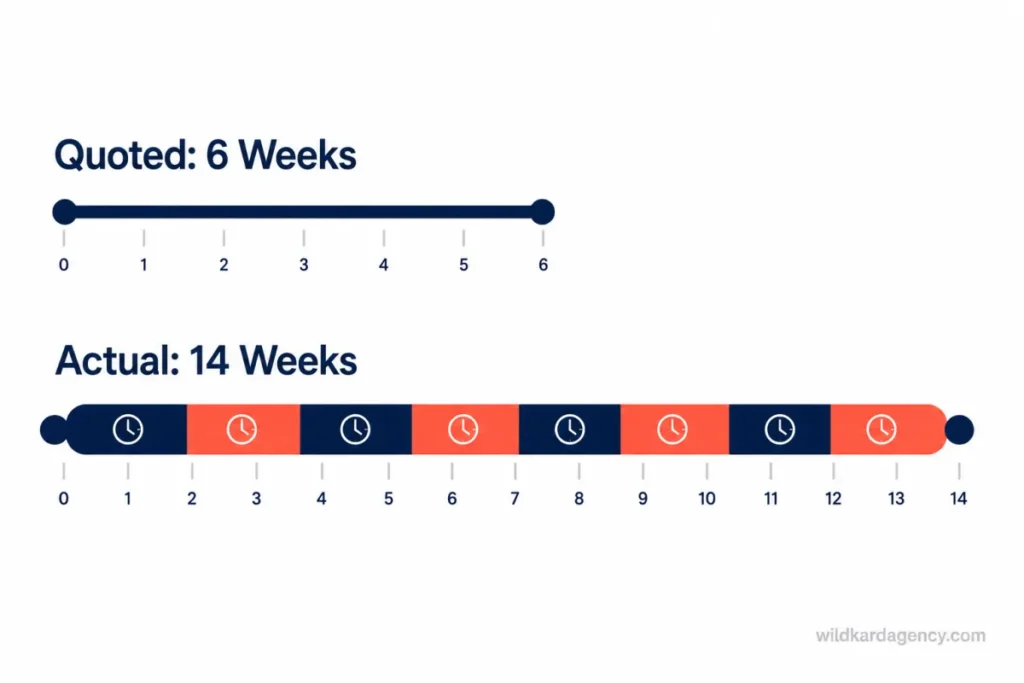
That’s why the honest answer to how long to build a website always has two parts: the agency’s working time, and the calendar time it takes once your side of the project is factored in.
Want a realistic timeline for your specific project, not a generic range? Book a free 15-minute call and we’ll map it out.
What a WildKard Web Build Actually Looks Like
At WildKard, every website project starts with a content and asset checklist before a single design decision gets made. Logo files, brand colors, photography, and page-by-page copy requirements go on that list on day one, because those are the four things most likely to stall a project in week three.
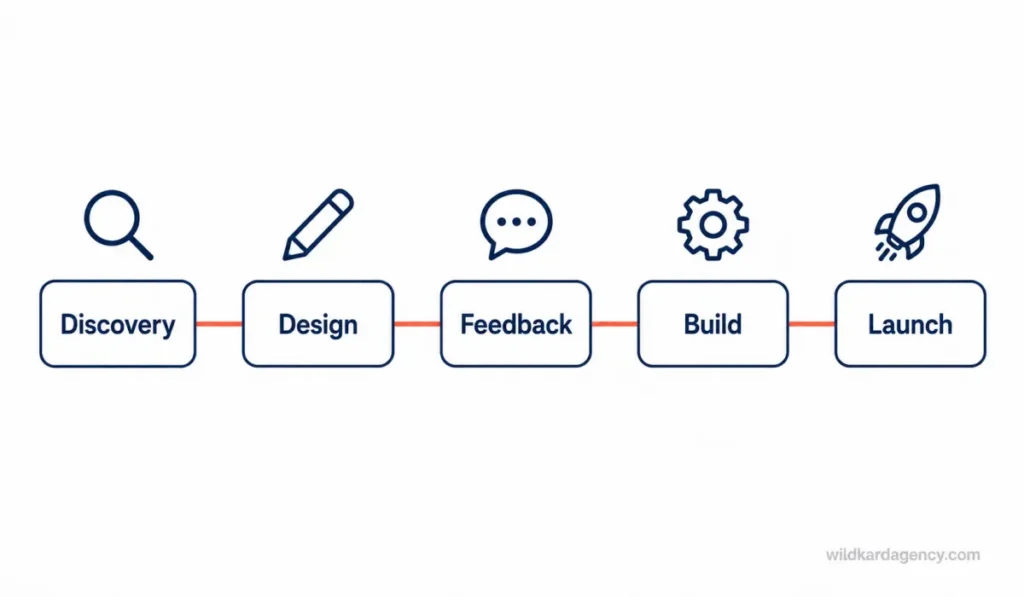
The web design process then follows a fixed structure: discovery and sitemap, design concepts, one consolidated round of feedback, build, and a final review before launch. One consolidated feedback round instead of an open-ended back-and-forth is the single biggest lever on the calendar, because every extra round adds a full week of waiting on both sides.
This is also where a high-converting website and a fast-to-launch website turn out to be the same project. A site built around a clear sitemap and ready content doesn’t just launch faster. It converts better too, for the same reason covered in our guide to why sites get traffic but no enquiries: rushed, unclear pages cost leads whether they launched on time or three months late.
Why “Launched” Doesn’t Mean “Findable” Yet
Here’s the timeline step most website launch timeline conversations leave out entirely: going live and being found are two different milestones.
According to Google’s own Search Console documentation, it can take a week or so for Google to even start crawling and indexing a brand new page or site. That’s before ranking, before traffic, before a single organic visitor arrives. A site that launches on a Friday isn’t meaningfully discoverable on Monday, no matter how fast the build was.
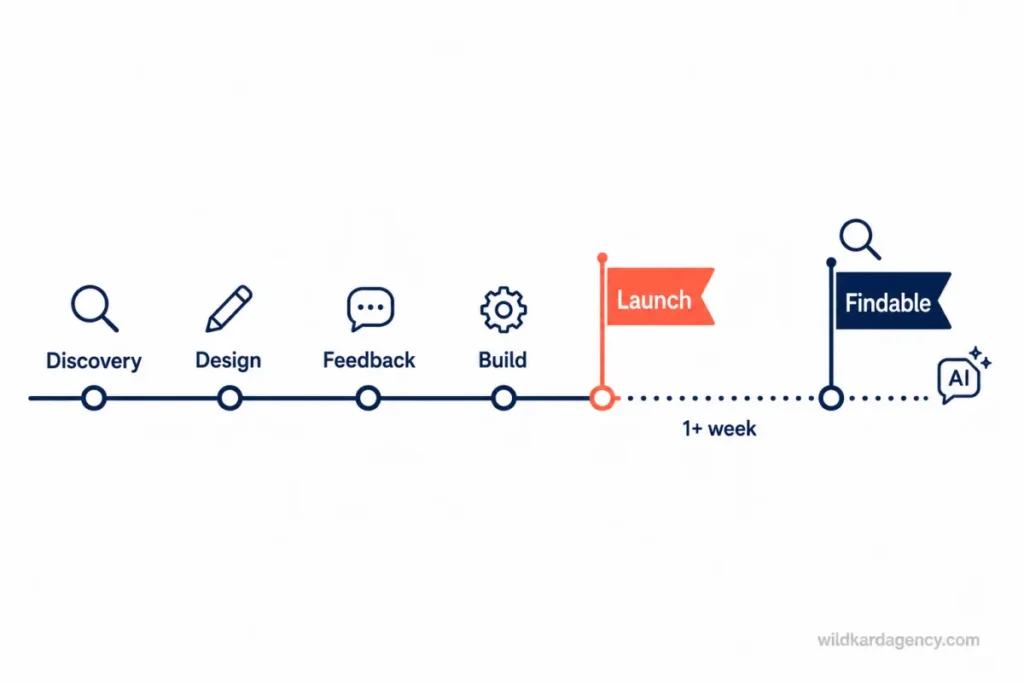
The same gap applies, often more severely, to AI answer engines. A new site with no established entity signals, inconsistent business details, or content AI crawlers can’t read takes longer to earn a citation in ChatGPT or Perplexity than it does to rank on Google. This connects to the same consistency and structure covered in our guide to generative engine optimization, and the reason some businesses never show up in ChatGPT results months after launch. “Live” is a build milestone. “Findable” is a separate, slower one.
Ready to plan a website timeline that accounts for launch and findability, not just design and build? Get in touch with us already.
How to Actually Speed It Up
None of these require rushing the design work. They remove the delays that have nothing to do with it.
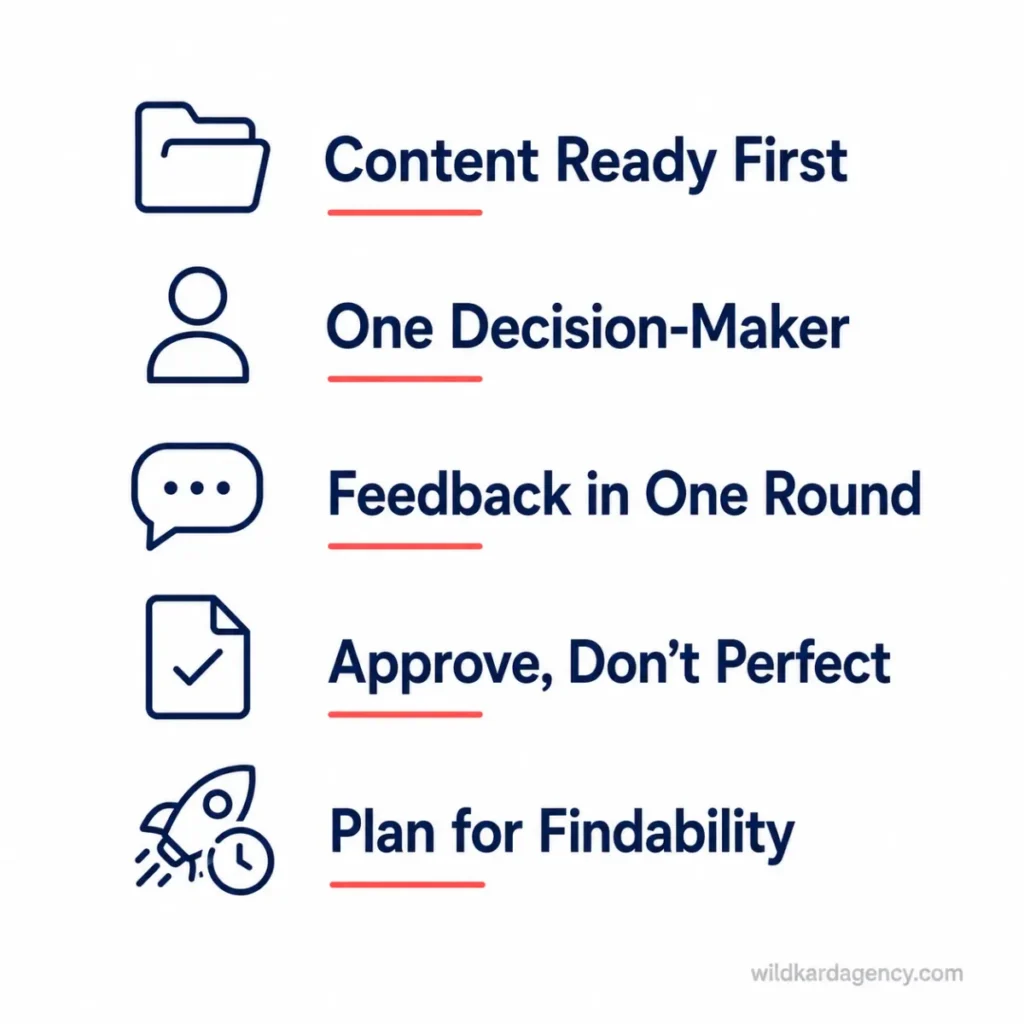
- Gather content and assets before kickoff, not during it: logo files, photos, and page copy first
- Name one decision-maker who gives final sign-off, not a committee that reviews separately
- Consolidate feedback into a single round instead of sending notes as they occur to you
- Treat the first version as close to final, and save major new ideas for a phase two after launch
- Plan for a findability runway after launch, not just a design and build runway before it
FAQ
Q: How long to build a website for a small business, realistically?
A: Four to eight weeks is realistic for a professional small business site with a freelancer or agency, assuming content and assets are ready at kickoff. Add two to six weeks if content still needs to be written or gathered.
Q: What’s the single biggest factor in the website development timeline?
A: How quickly content and feedback come from your side. Design and development time is fairly predictable. Waiting on copy, photos, and stakeholder approval is the variable that turns a 6-week quote into a 14-week project.
Q: Can a website really be built in a weekend?
A: A basic DIY site using a modern builder can go live in a day or two. It won’t include custom design, SEO structure, or conversion-focused copy, so treat it as a placeholder rather than a finished business asset.
Q: Does the website launch timeline include getting found on Google?
A: No, and this trips up a lot of business owners. Google can take a week or so just to start indexing a new site, and ranking takes longer still. Build launch and search visibility into two separate expectations.
Q: How can I speed up my own website project without cutting corners?
A: Have your content and assets ready before the project starts, name one final decision-maker, and give feedback in a single consolidated round. These three changes alone remove most of the delay that has nothing to do with the design work itself.
Ready to talk timeline for your website project? Get in touch