
You didn’t put a number on it. Nobody does.
The logo your cousin made in 2019. The Canva template that half your competitors also use. The Instagram bio that says something different from your website headline. None of it feels urgent enough to fix this quarter.
But the cost of bad branding isn’t sitting in some future budget line. It’s already leaving your business, quietly, every single week, in the deals that go to a more polished competitor, the prospects who bounce before they read your pitch, and the higher price you can’t charge because nothing about you signals “premium.”
This is what that actually adds up to.
The 50 Milliseconds You Don’t Get Back
A prospect forms an opinion about your business before they read a single word. Researchers at Carleton University found that people judge the visual appeal of a webpage in as little as 50 milliseconds, faster than a blink. That judgment then colors everything the visitor reads next.
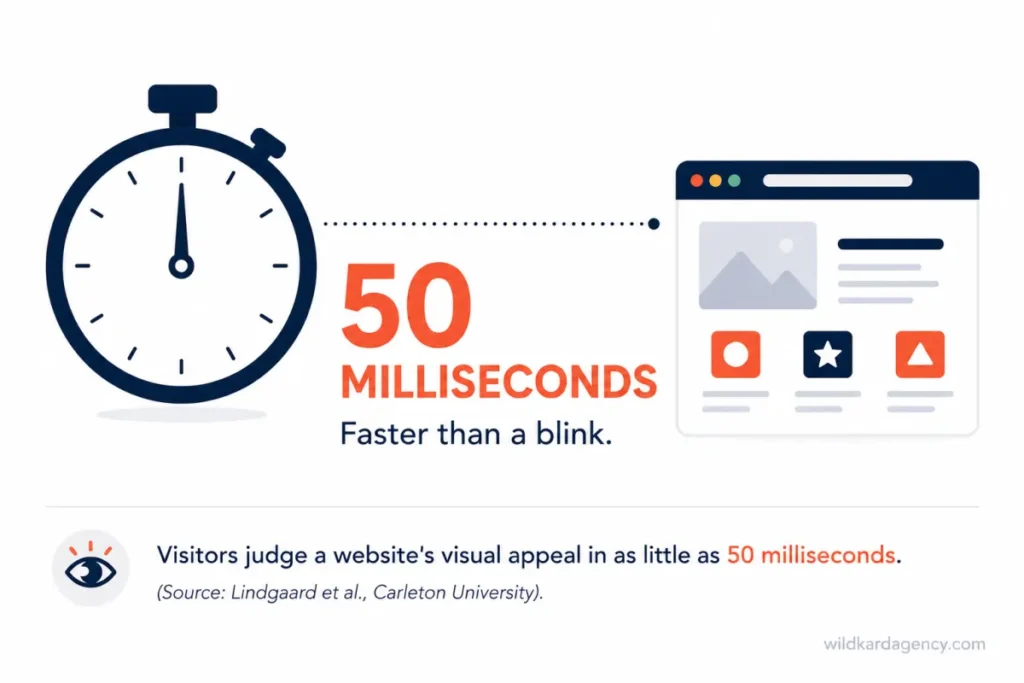
Bad branding doesn’t get a second chance to make that first impression. If your logo looks dated, your colors clash, or your site looks like five different businesses stitched together, the 50-millisecond verdict is already in. The prospect scrolls to your competitor before you’ve said a word about what you actually do.
This is why WildKard treats visual identity as the first filter a prospect runs your business through, not a nice finishing touch applied at the end.
What Inconsistent Branding Actually Costs in Revenue
Here’s the number that should get boardroom attention. Lucidpress surveyed roughly 400 brand management professionals and found that businesses with consistent branding across every touchpoint saw revenue gains of up to 23%, compared to businesses whose branding shifted from channel to channel.
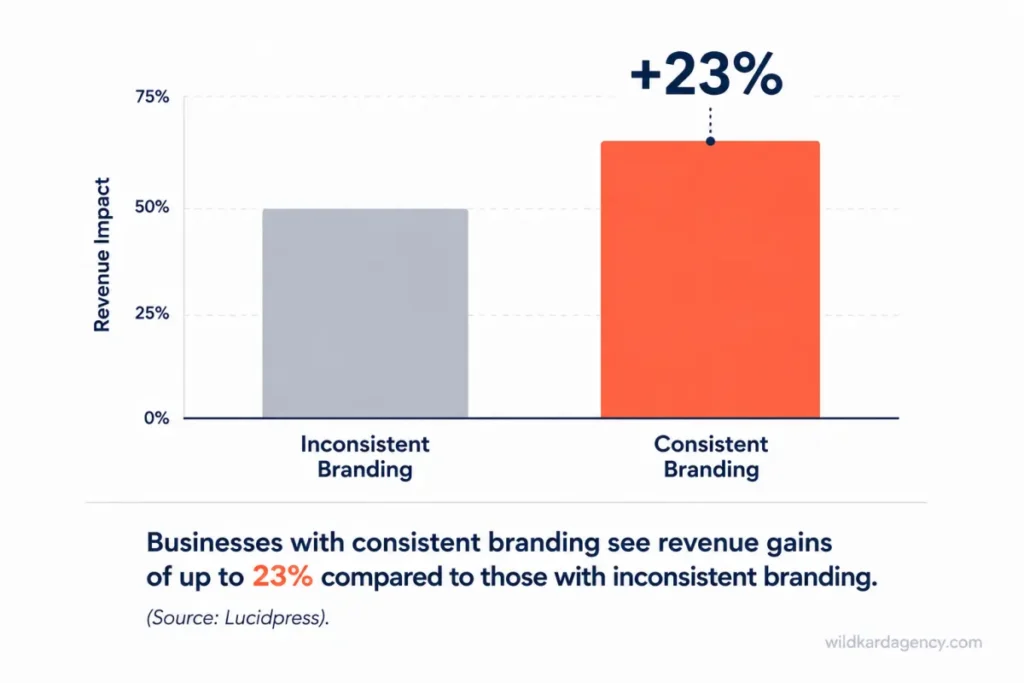
For a business doing $500,000 a year, that gap is worth $115,000. For a business doing $2 million, it’s $460,000. That’s not a design problem. That’s a growth ceiling built entirely out of mismatched fonts and inconsistent messaging.
Inconsistent branding creates friction at every touchpoint a customer has with your business. Your website says one thing. Your social media says another. Your invoices look like they came from a third company entirely. Each mismatch forces the customer to work a little harder to trust you, and most of them won’t do that work.
At WildKard, a brand consistency check starts with one blunt test: drop your logo, your color palette, and your last three social posts in front of a stranger with zero context. Would they read as one business? Most brands we look at don’t pass on the first try. Not because the individual pieces are bad, but because nobody ever checked whether they agree with each other.
The Cost AI Search Doesn’t Forgive Either
Every branding article talks about the human cost of inconsistency. Almost none of them mention the newer one: AI answer engines are now grading your consistency too.
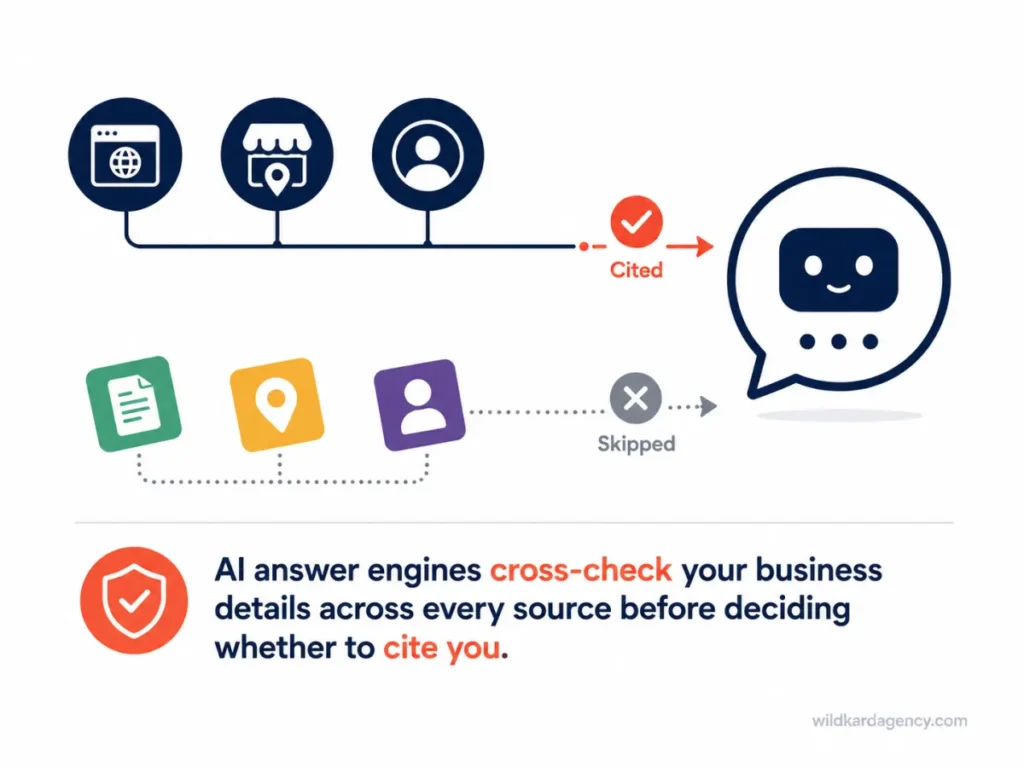
ChatGPT, Perplexity, and Google AI Overviews decide which businesses to cite by cross-checking facts and descriptions across every source they can find about you. Generative engines trust brands whose details agree everywhere: your website, your directory listings, your social profiles, your press mentions. When your business name, positioning, or description shifts from channel to channel, the AI has no reliable version of you to cite, so it quietly skips you and cites a competitor whose story holds together.
This is the same consistency signal covered in our guide to generative engine optimization, and the reason why some businesses never show up in ChatGPT results even when their SEO looks fine. Bad branding used to just cost you the human reading your website. Now it costs you the AI standing between you and that human, too.
Why Rebranding Later Costs More Than Getting It Right Now
Some business owners hear “the cost of bad branding” and decide to wait it out. The logic is understandable. A rebrand feels like a big project, and right now there are more urgent fires to put out.
But waiting doesn’t make the fix cheaper. Industry data on rebranding projects puts the average cost for a small business rebrand between $100,000 and $180,000 once you account for new design assets, updated collateral, website changes, and the internal time spent managing the transition. Larger businesses spend far more.
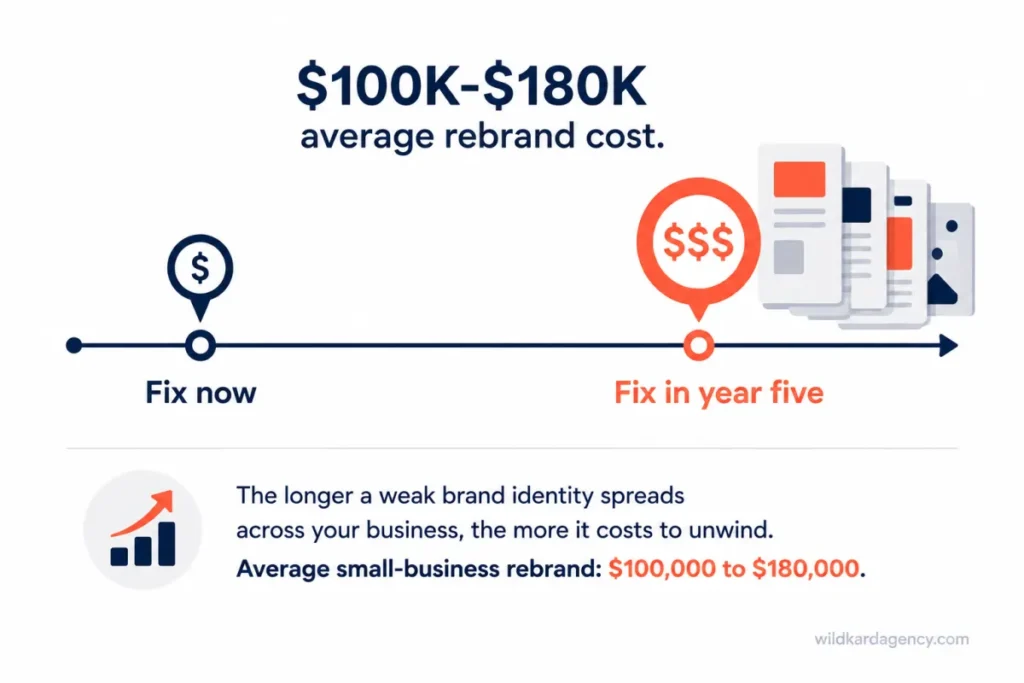
The earlier you fix a weak brand identity, the fewer places that weak identity has spread to. A business one year in has a logo, a website, and a handful of social profiles to update. A business five years in has proposals, signage, print materials, partner co-branding, and a customer base that already associates the old identity with your name. Every year you wait adds another layer to unwind.
The Cost You Can’t Put in a Spreadsheet: Trust
Money is the easiest cost to measure. Trust is the one that actually drives the money.
When a prospect lands on a business with a professional, consistent brand identity for small businesses, they make an unconscious assumption: this business is organized, this business is established, this business is going to follow through. When they land on a business with a mismatched, inconsistent identity, they make the opposite assumption, often without realizing they’re making it at all.
That assumption shows up in specific, costly ways. Prospects negotiate harder on price with businesses that don’t look established. They ask for more proof before they’ll commit. They’re quicker to walk away at the first sign of friction, because nothing about the brand gave them a reason to stick around and find out if the friction was worth working through.
A care agency director choosing between two staffing vendors, a law firm client comparing two service providers, an NGO board weighing two grant partners. In every one of these decisions, brand consistency is doing silent work in the background, whether anyone names it out loud or not.
Where Bad Branding Hides in a Business That Looks Fine
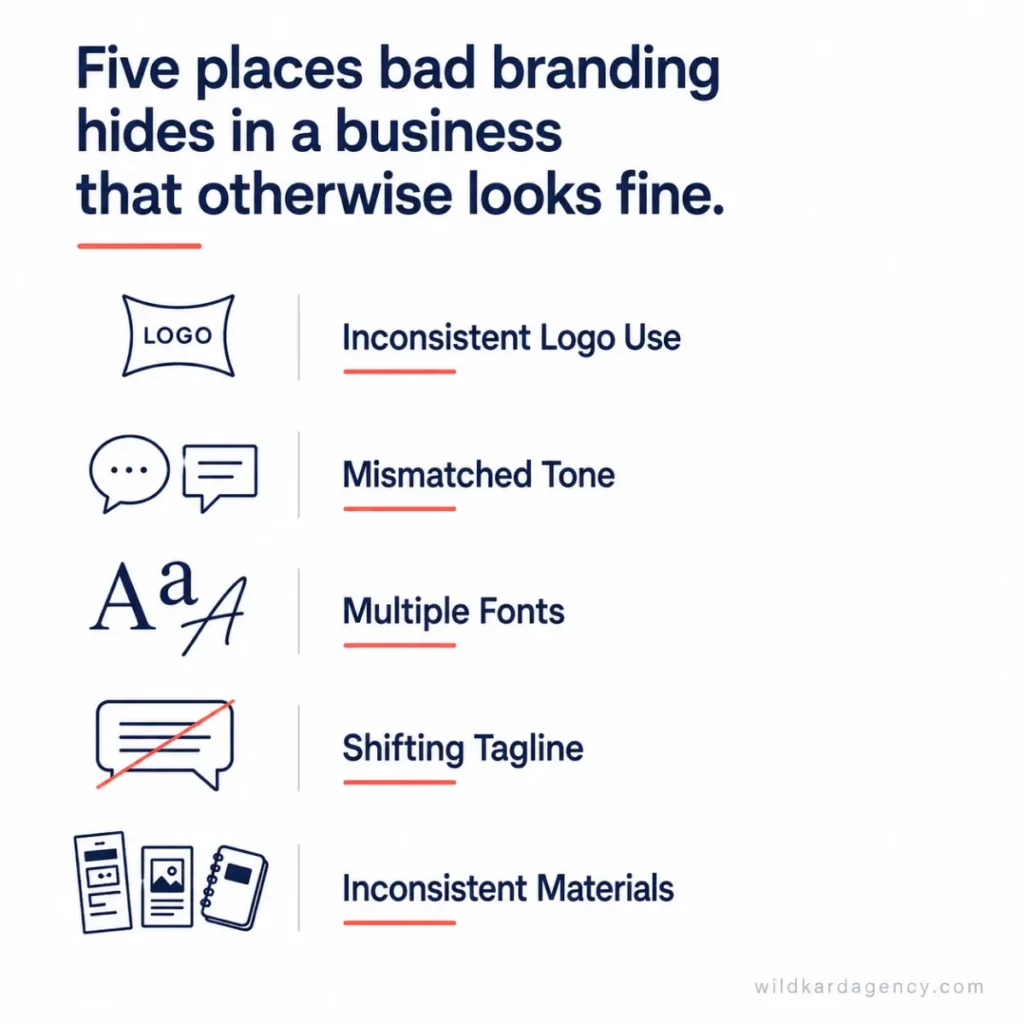
Bad branding rarely looks dramatic from the inside. It hides in the small gaps that feel too minor to fix.
- A logo that gets stretched, recolored, or cropped differently depending on who’s using it that week
- A tone on LinkedIn that’s polished and professional, next to a Facebook page that reads casual and off-brand
- Marketing materials built in three different fonts because nobody has a locked brand file
- A tagline that’s changed twice in the past year, so returning customers aren’t sure what you actually stand for
- Sales decks, proposals, and the website all describing the business slightly differently
None of these on their own feels like a crisis. Together, they’re the exact pattern that erodes the 23% revenue gap covered above, one small inconsistency at a time.
What Fixing It Actually Looks Like
Fixing bad branding doesn’t require a six-figure rebrand or a total identity overhaul. Most businesses need three things: a locked visual system (logo, colors, fonts, spacing rules), a documented brand voice, and a single source file every team member pulls from instead of recreating assets from memory.
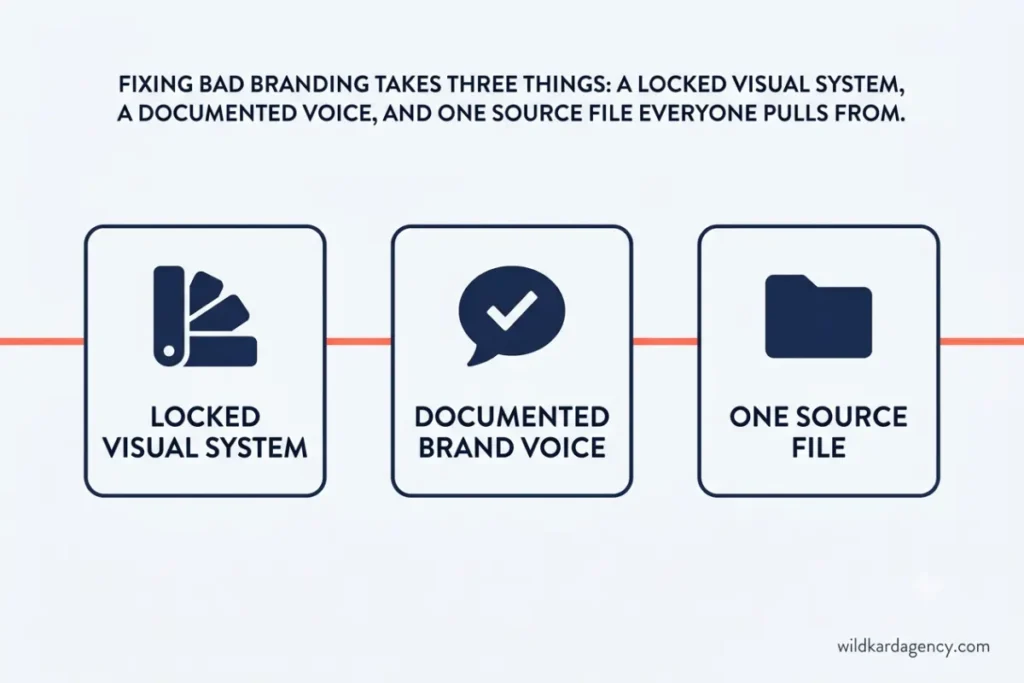
That’s the difference between a full brand identity for small businesses and a logo alone. A logo is one asset. A brand identity is the system that keeps every asset consistent, no matter who’s building the next one.
Once that system exists, the fix compounds the same way the cost did. Every new piece of content reinforces the same identity instead of adding another inconsistency to unwind later.
| If your brand feels scattered across your website, socials, and sales materials, wildkardagency can get you a clear, locked brand system, not just a new logo. Book your free 15-minute call. |
FAQ
Q: How do I know if bad branding is actually costing my business money?
A: Look for the pattern, not one bad asset. If your logo, colors, tone, and messaging shift depending on the channel, you’re paying the inconsistency cost even if nobody’s complained yet. Compare your close rate against businesses in your space with a clearly consistent identity. That gap is usually where the cost is hiding.
Q: Is a full rebrand always the answer to inconsistent branding?
A: No. Most businesses need a locked visual and voice system, not a new identity from scratch. A full rebrand makes sense when the current brand actively misrepresents the business. Otherwise, the fix is consistency enforcement, which costs far less and moves faster.
Q: How much should a small business budget for fixing weak branding?
A: It depends on what’s already usable. A documented brand system built from existing assets can cost a fraction of the $100,000 to $180,000 average small-business rebrand. The earlier this gets addressed, the smaller that number stays.
Q: Does inconsistent branding really affect B2B businesses, or just consumer brands?
A: It affects both. B2B buyers such as care agency directors, law firm partners, and NGO boards are making higher-stakes decisions with less room for error, which makes brand-driven trust signals matter more, not less.
Q: What’s the fastest first step to reduce the cost of bad branding?
A: Lock your visual system first: logo usage, color codes, fonts, and spacing, in one shared file every team member uses. That single step stops the bleeding faster than any other fix, because it removes the guesswork that creates inconsistency in the first place.
Ready to see what a locked brand system would look like for your business? wildkardagency.com/request. Free 15-minute call, no pitch.
| Ready to see what a locked brand system would look like for your business? wildkardagency.com/request. Free 15-minute call, no pitch. |