
| Administrative support for social services agencies means non-regulated operational help, scheduling, documentation formatting, correspondence, compliance paperwork, and back-office coordination, that reduces the load on direct support professionals (DSPs) without ever touching the delivery of care itself. This matters nationally because the average DSP turnover rate sits at roughly 40.9%, costing the field an estimated $2.3 billion annually in the US alone, and a growing body of research points to administrative burden, not just wages, as a significant driver. This guide covers what is actually happening to the DSP workforce across several states, why admin load is a bigger factor than most agencies assume, and what non-regulated administrative support can realistically take off a team’s plate. |
This Is Not an Ohio Problem, or a New York Problem. It Is a National One
If you run or manage a social services agency, you already know the feeling. A DSP you trained for months gives notice. The req sits open for weeks. Whoever is left covers the gap, on top of paperwork that was already piling up before the vacancy happened.
It is tempting to treat this as a local staffing problem, specific to your county, your state’s Medicaid rates, or your own hiring process. The data says otherwise. The average annual DSP turnover rate across the US sits at 40.9%, per the most recent National Core Indicators Staff Stability Survey, covering 26 states and the District of Columbia. This is not a regional issue. It is structural, and it costs the field an estimated $2.3 billion a year nationally in recruitment, onboarding, and retraining.
Wages are the most commonly cited cause, and they are a real factor. But wages alone do not fully explain why 59% of DSPs who leave do so within their first year, per NCI turnover research. Something is pushing people out fast, often before they have had time to grow into the job. A growing body of research points to a second, less talked-about factor: administrative burden.
What the Data Actually Shows Across Different States
The specifics vary state to state, but the underlying pattern repeats. Here is what three states with genuinely comparable data show.
| State | Recent DSP Turnover | Wage Trend | Notable Detail |
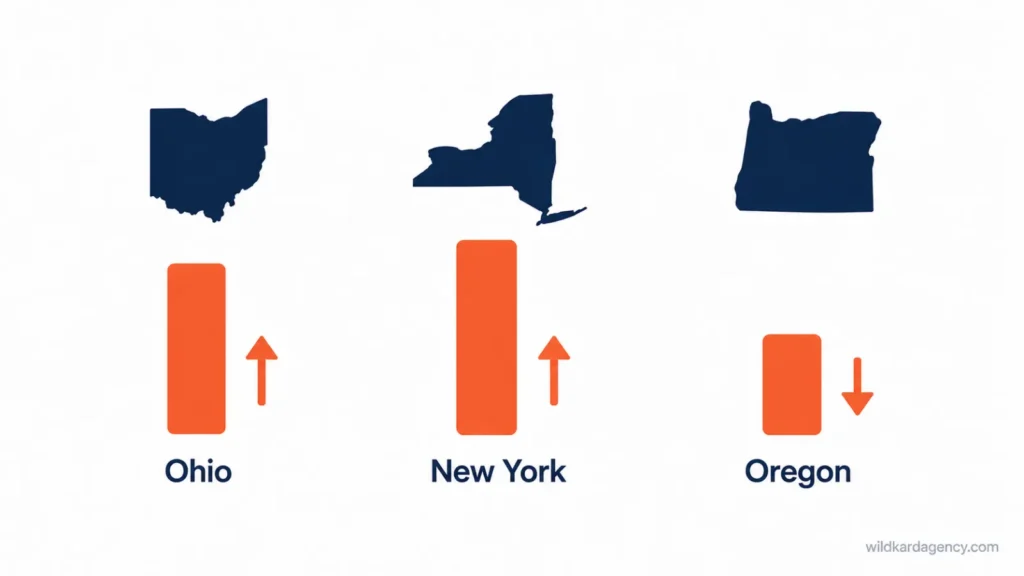
| Ohio | Improving as of 2024-25 budget cycle | $12.10 to $19/hr through DODD’s compensation initiative | Providers self-report being fully staffed for the first time in years since the wage increase |
| New York | 40.9% statewide average (OPWDD 2023 data) | Tracked via the NCI-IDD State of the Workforce Survey | Statewide DSP-to-supervisor ratio averages 12:1 |
| Oregon | Above 50% in tenure groups under 2 years | Median starting pay ranged $11 to $20/hr across agencies | Turnover concentrated almost entirely in the first 24 months of tenure |
Ohio: A Real-Time Case Study in What Investment Changes
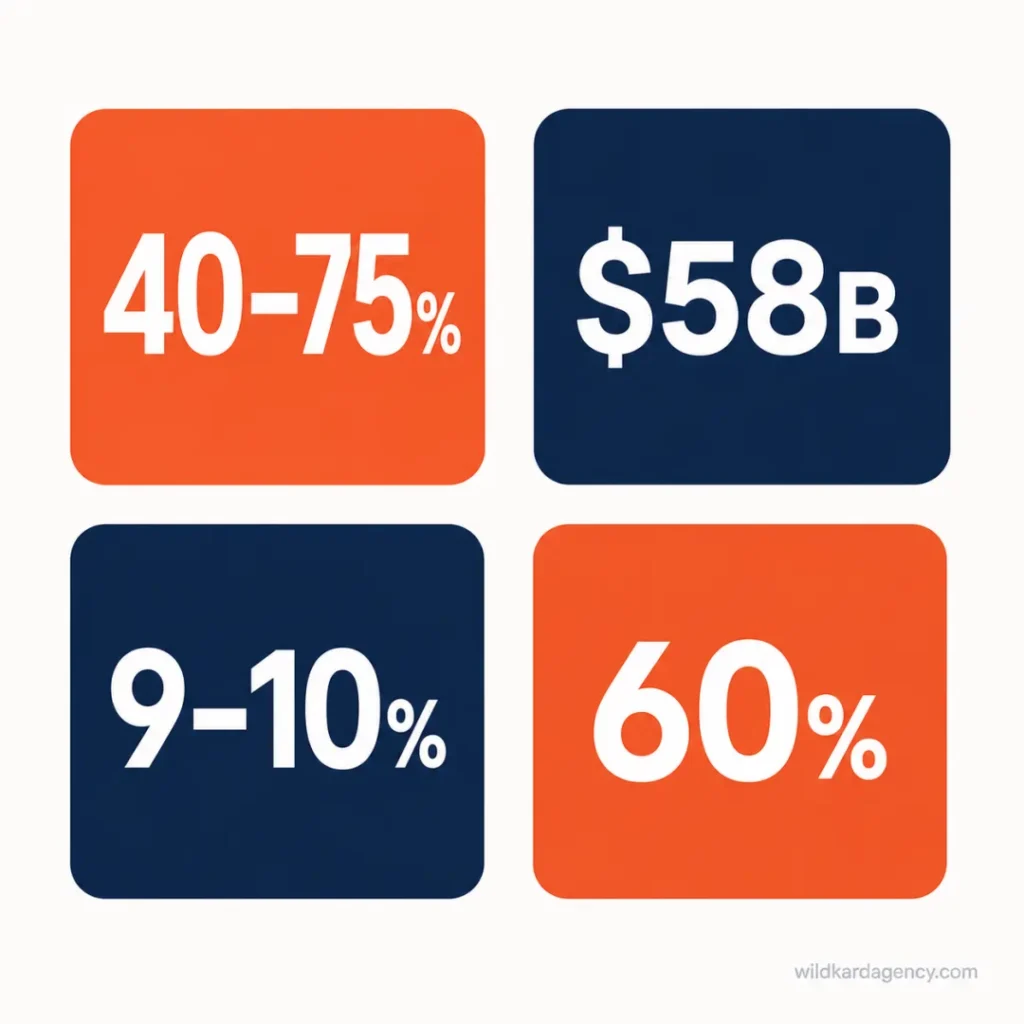
Ohio is worth a closer look because it is mid-experiment. As recently as the last state budget cycle, the average starting wage for a DSP in Ohio was $12.10 an hour, below the federal poverty line for a family of four, per testimony from DODD Director Kim Hauck. The state’s most recent two-year budget raised the average DSP wage in stages, to $18 an hour starting January 2024 and $19 an hour starting July 2024, funded through increased waiver reimbursement rates. Ohio’s roughly 50,000 DSPs support close to 98,000 people with developmental disabilities statewide.
What happened next is the part worth paying attention to. Providers began self-reporting to DODD that many were fully staffed for the first time in years, with lower turnover following the wage increase. Wages clearly matter. But agencies that raised wages and did nothing about administrative load are still watching staff leave within the first year, which is the strongest evidence that pay is necessary but not sufficient on its own.
| If DSP burnout in your agency traces back to admin load specifically, our deeper breakdown covers the mechanism in detail: Why DSP Burnout Often Starts With Admin, Not Care Delivery. |
Why Administrative Burden Is the Factor Most Agencies Underweight
Documentation is not incidental to the job. It is federally mandated. Electronic Visit Verification, required under the 21st Century Cures Act for all Medicaid-funded personal care and home and community-based services, requires agencies to hit compliance rates of 85% to 95%, per state EVV compliance requirements, or risk reduced Medicaid reimbursement. Every visit needs a timestamp, a location, a service code, and a caregiver ID logged correctly, on top of incident reports, individual service plan updates, and shift notes.
Peer-reviewed research on DSPs specifically, not just the broader direct care field, confirms this is a genuine driver of overload. A 2024 study on digital documentation tools for DSPs found that documentation requirements contribute significantly to DSP overload and stress, and that turnover itself compounds the problem: when a DSP leaves, the people covering the gap inherit more documentation, not less, since new hires need detailed notes to get up to speed on each individual’s needs.
For context on scale, research in the adjacent direct-care nursing field found clinicians spend up to 40% of a shift on documentation alone, per the US Surgeon General’s Advisory on health worker burnout. DSP-specific research does not yet have as precise a percentage, but the qualitative pattern, documentation eating time that should go to the people being supported, is consistently described the same way.
What Administrative Support for Social Services Agencies Actually Looks Like
This is where scope matters, and where WildKard draws a hard line. Administrative support for social services agencies means non-regulated operational work only. It never includes direct contact with, or support for, individuals receiving care. That distinction is not just a compliance formality. It is what makes outside support usable at all in a heavily regulated field.
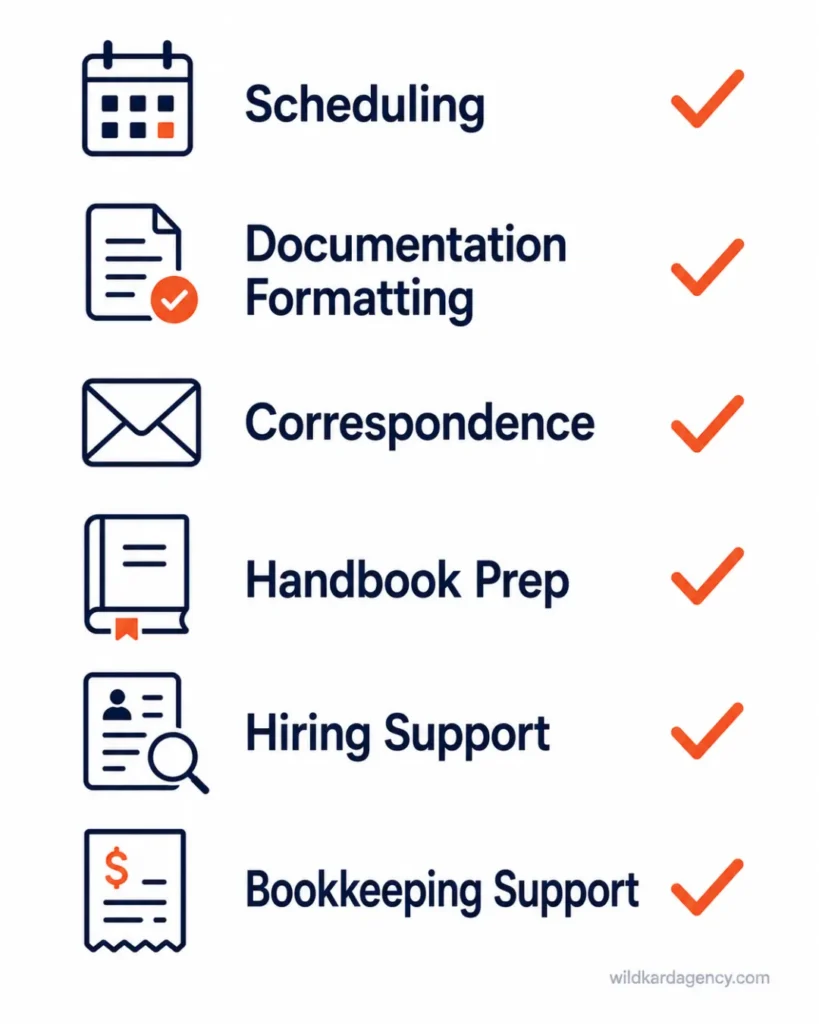
• Scheduling and shift coordination, keeping calendars and coverage requests organized
• Formatting and organizing documentation for compliance review, not generating clinical content
• Correspondence and email management with families, county boards, and referral sources
• Staff handbook and onboarding document preparation
• Job posting management and initial application screening for open DSP roles
• General bookkeeping coordination and invoice preparation support
Why Lived Experience Changes How This Support Gets Built
Most agencies offering back-office support to care organizations have never worked inside one. WildKard’s team includes former DSPs and house managers, people who have lived the exact admin load described above from the inside, not read about it in a workforce survey. That matters for a simple reason: knowing which documentation genuinely has to happen a certain way, versus which parts are just inherited busywork, only comes from having done the job.
This is also why the scope stays deliberately narrow. Someone who has managed a house knows exactly where the line between operational support and care delivery sits, because they have seen what happens when that line gets blurred. That is a harder thing to get right from the outside than most agencies assume.

| If admin load is pulling your team away from the people you support, we can show you exactly what non-regulated support would look like for your agency. Book a free 15-minute call. wildkardagency.com/request |
Why This Also Matters to Families and Referral Sources
There is a second audience for administrative support for social services agencies that rarely comes up in workforce research: the families and referral sources deciding which agency to trust. A DSP juggling documentation on top of a full caseload has less time for the small things that build family confidence, a returned call same day, a scheduling change communicated clearly, a service plan update that actually reads as current rather than copy-pasted from six months ago.
None of that requires a clinical judgment call. It requires someone with the bandwidth to handle it well and consistently, which is exactly the gap non-regulated administrative support is built to close. Agencies that solve the admin bottleneck are not just retaining staff longer. They are also showing up more reliably to the people evaluating whether to trust them with a family member’s care in the first place.
The Real Cost of Doing Nothing
Turnover math is easy to underestimate because the cost is spread across many small, hard-to-track expenses rather than one visible line item. At $4,630 per departure in recruitment, onboarding, and retraining costs, an agency losing even 8 to 10 DSPs a year, well within the national average for a mid-sized provider, is absorbing $37,000 to $46,000 annually just replacing people, before counting the cost of overtime coverage, supervisor time spent interviewing, or the quality-of-care disruption every new hire’s learning curve creates for the people being supported.
If a growing administrative workload is what is loosening someone’s grip on the job in month four or five, addressing that specific pressure is very often cheaper than the alternative, which is repeating the entire recruitment and onboarding cycle every few months indefinitely. This is the same logic covered from the business-owner side in our complete guide to virtual assistance for business owners: delegating the load that is not the reason someone joined the field in the first place protects the part of the job that is.
Frequently Asked Questions
What counts as administrative support for a social services agency?
Non-regulated operational work: scheduling, documentation formatting, correspondence, staff handbook preparation, job posting management, and bookkeeping coordination. It never includes direct contact with or support for individuals receiving care, which stays entirely within the agency’s own certified staff.
Is DSP turnover really a national issue, or mainly a certain states’ problem?
National. The most recent National Core Indicators data puts average turnover at 40.9% across 26 states and DC. Individual states vary in wage levels and trajectory, Ohio, New York, and Oregon each show a different piece of the picture, but the underlying pattern of high, fast turnover repeats almost everywhere.
Does raising DSP wages solve the turnover problem on its own?
It helps significantly but not completely. Ohio’s recent wage increases correlate with providers reporting improved staffing and lower turnover, but agencies that raised wages without addressing administrative load are still seeing early departures. Wages and admin burden appear to be separate, compounding factors, not one substituting for the other.
How is EVV connected to DSP admin burden?
Electronic Visit Verification is a federal requirement under the 21st Century Cures Act for Medicaid-funded home and community-based services. Agencies must hit 85-95% compliance rates or risk reduced reimbursement, which means every visit requires accurate, timely documentation on top of existing paperwork, adding to the load research links to DSP overload.
Can outside administrative support work for a DODD-certified or Medicaid-funded agency?
Yes, as long as the scope stays strictly non-regulated. Support limited to scheduling, documentation formatting, correspondence, and back-office coordination does not touch service delivery, which is what allows an outside team to help without crossing into regulated care functions.
| This guide covers administrative support for social services agencies at the national level. If you want to know what it would look like for your specific agency, we will show you in a free 15-minute call, no pitch. wildkardagency.com/request |