
Your Website Is Either Making You Money Or Costing You Leads
| A high converting website for small business is one that turns visitors into enquiries at a rate above the current global median of 2.35%, according to 2026 aggregated benchmark data. Top performing small business sites convert at 5% or higher. The gap comes down to five factors: page speed, mobile performance, a single clear call to action per page, visible trust signals, and content structured for both search engines and AI answer engines. A professional small business website typically costs $1,500 to $15,000 to build, depending on complexity, and takes four to twelve weeks from discovery to launch. This guide covers what actually separates a converting website from a digital brochure, what it costs, and how long it takes to do it right. |
You already have a website. Most business owners do. Whether you built it yourself over a weekend or paid an agency five figures for it, that site is doing one of two things right now. It is turning strangers into enquiries, or it is quietly losing them.
A 2026 small business website report from Network Solutions found that 83% of small businesses now have a website, up from just 64% in 2018. Having a website stopped being a differentiator years ago. What separates the businesses winning online from the ones burning traffic is whether that website actually converts.
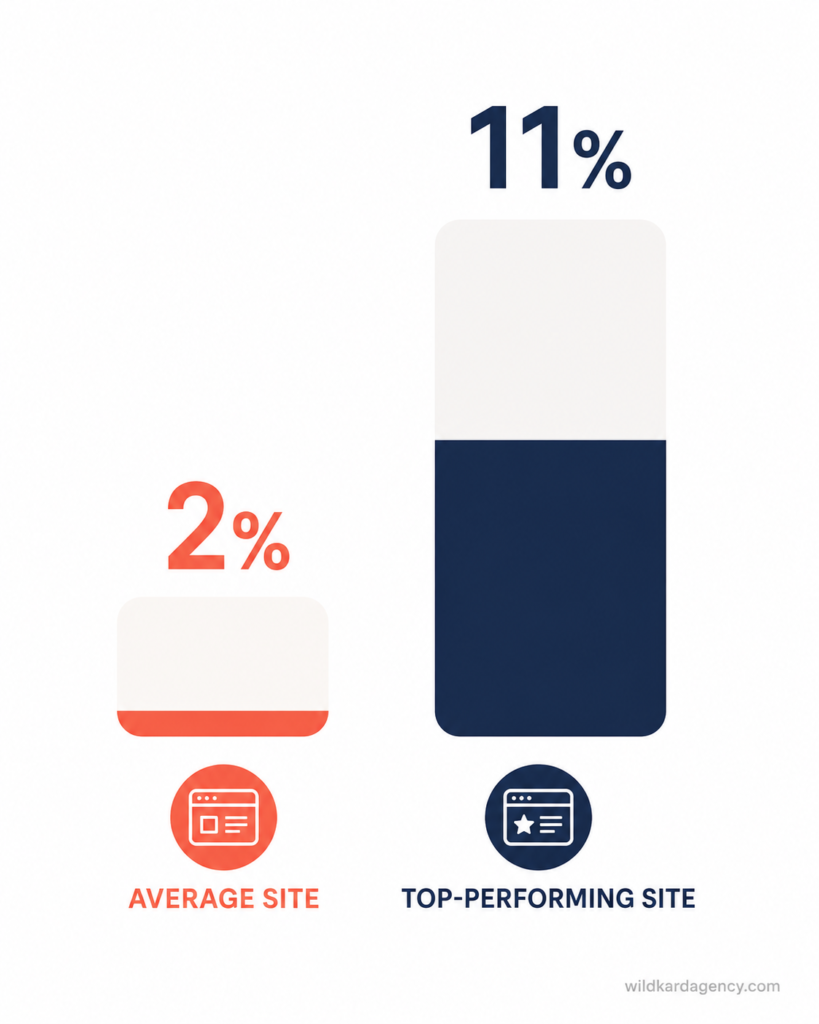
Across all industries, the median website converts just 2.35% of visitors in 2026, according to aggregated benchmark data from WordStream and Invesp. That means for every 100 people who land on the average small business site, 97 leave without calling, booking, or filling out a form.
A high converting website for small business owners does not need luck or a bigger ad budget to close that gap. It needs the right foundation. That is what the rest of this guide covers, starting with what actually separates a converting site from a digital brochure. If the bigger drain on your week is admin rather than your website, our complete guide to virtual assistance for business owners is the more useful read.
What a High Converting Website for Small Business Actually Does
The top 10% of websites convert at 11.45%, nearly five times the median. That is not a fluke of better products or bigger budgets. It comes down to a handful of structural decisions that most small business sites simply never make.
The gap is largest on the device most of your visitors are actually using. Mobile traffic converts at just 1.82% compared to 3.14% on desktop, a 42% gap that has widened since 2024 despite a decade of talk about mobile-first design. If your site was designed on a desktop monitor and never properly tested on a phone, this is very likely where you are losing people.
There is a second, newer gap worth watching. Traffic arriving from AI tools like ChatGPT and Perplexity now converts at 3.49%, compared to 2.86% from traditional organic search. Visitors who click through from an AI answer arrive pre-qualified, because the AI has already narrowed their options before they ever reached your site. Structuring your content so AI tools can find and cite it, a practice known as Generative Engine Optimization, is quickly becoming as important as traditional SEO.
| 2.35% | Median website conversion rate across all industries in 2026, meaning 97 out of 100 visitors leave without taking action (aggregated 2026 benchmark data) |
| 11.45% | The conversion rate of the top 10% of websites, a gap that has been widening year over year (Invesp / WordStream, cited in 2026 benchmark reports) |
| 42% | The conversion gap between mobile (1.82%) and desktop (3.14%) traffic in 2026, up from 38% in 2024 despite a decade of mobile first design investment |
| 32% | Increase in bounce rate when load time goes from 1 to 3 seconds; 53% of mobile visitors leave a page that takes longer than 3 seconds to load (Google / Network Solutions, 2026) |
| 83% | Of small businesses now have a website, up from 64% in 2018, meaning having a site is no longer the differentiator (Network Solutions, 2026) |
None of these numbers are abstract. They translate directly into enquiries, and enquiries translate directly into revenue. The next question is what it actually costs to build a website engineered around them.
The Real Website Design Cost for a Small Business That Converts
Website pricing conversations get vague fast, usually because website means completely different things depending on who is building it. A DIY builder site, a freelancer build, and a full agency project are not the same product at different price points. They are three different levels of what the website can actually do for you.
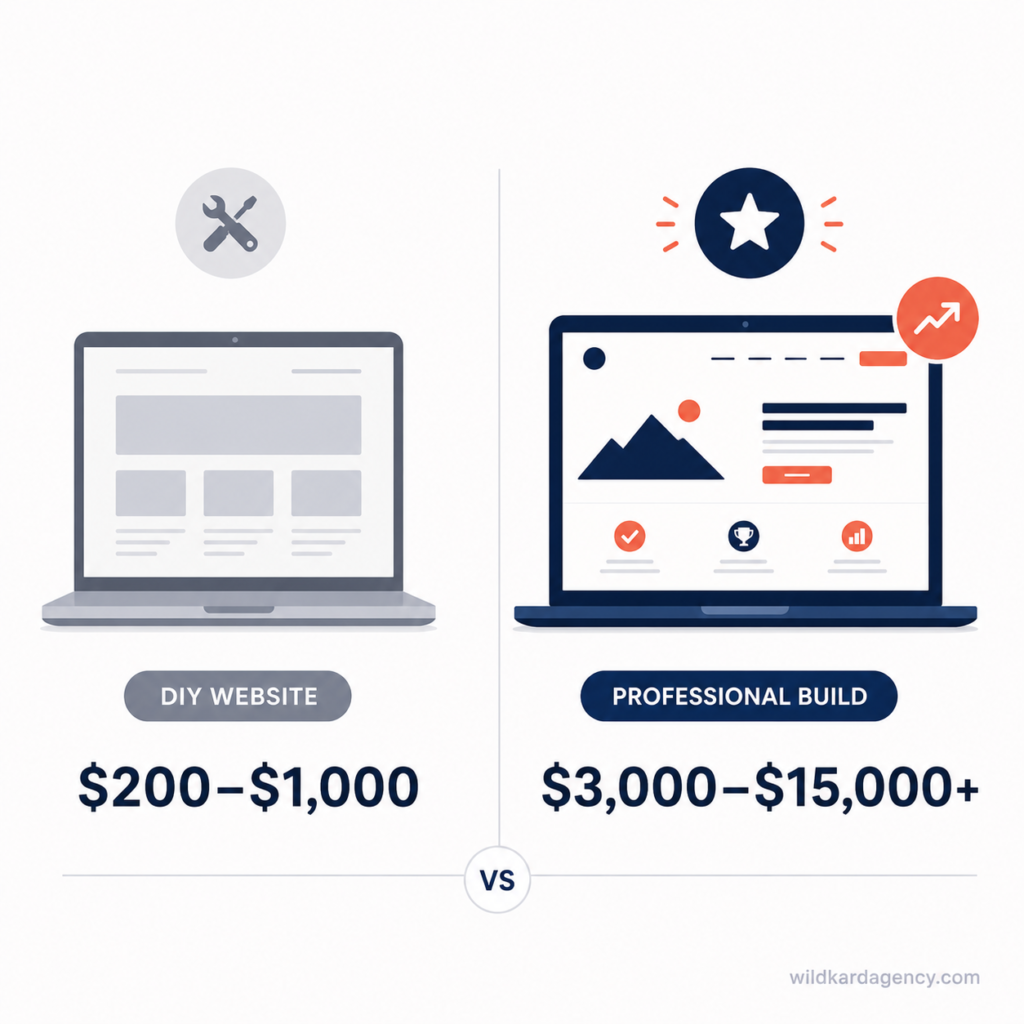
A basic DIY site on a no-code builder runs $0 to $1,000 for the first year, covering a domain, hosting, and a premium theme. It gets you online fast. It rarely gets you conversion-focused structure, proper SEO setup, or a design that reflects your brand rather than the template’s default.
A freelancer-built WordPress site typically runs $1,500 to $8,000 for a five-page brochure site, according to 2026 small business pricing data, and takes four to six weeks to complete. This is where most small businesses land, and where the quality gap between freelancers is widest.
A fully custom agency build, with strategy, copywriting, SEO and GEO setup, and conversion-focused design, runs from $10,000 to $35,000 or more depending on scope. This is the right tier for businesses where the website is a primary lead source, not just a digital business card.
| DIY Builder | Professional Build | |
| Typical cost | $0-$1,000/year | $1,500-$15,000 one time |
| Timeline | Hours to days | 4-12 weeks |
| Design control | Template limited | Fully customized to brand |
| SEO/GEO setup | Rarely included | Built in from the start |
| Who maintains it | You, entirely | Managed or handed off with training |
| Risk if it underperforms | Rebuild from scratch later | Iterate on a proper foundation |
The number most owners skip is the cost of getting it wrong the first time. Cheap builds that need to migrate off unreliable hosting or get rebuilt from scratch typically cost $700 to $6,000 to fix, on top of whatever the original build cost. Budgeting for it once, properly, is almost always cheaper than budgeting for it twice.
| If your website is getting traffic but not enquiries, the fix is rarely a full rebuild. Book a free 15-minute call and we will tell you exactly what is costing you leads. wildkardagency.com/request |
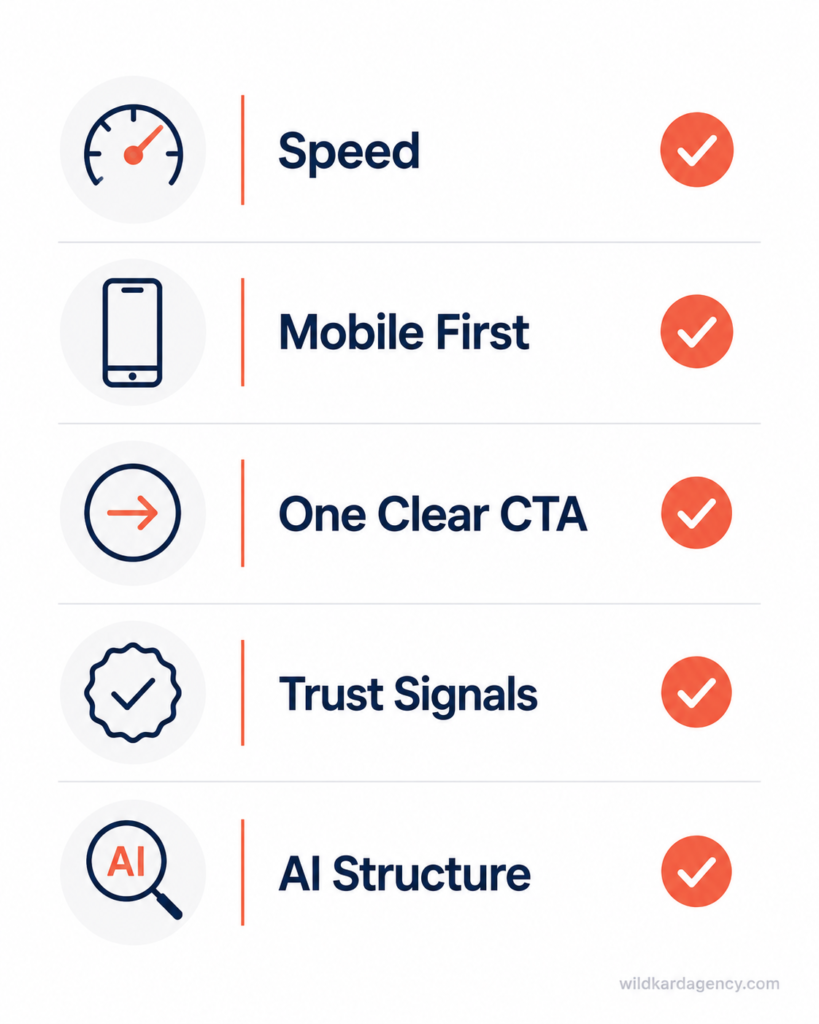
The Five Things That Separate a Converting Site From a Brochure Site
Reversed, these five decisions are also the five most common small business website mistakes we hear about on discovery calls. Fix them in this order.
1. Speed, measured in seconds, not vibes
A load time that slips from 1 to 3 seconds raises bounce rate by 32%. More than half of mobile visitors, 53%, abandon a page that takes longer than 3 seconds to load, according to Google’s own research cited in 2026 small business web data. Speed is not a nice-to-have. It is the gate every other element on the page has to get through first.
2. Mobile performance built in, not bolted on
Mobile traffic makes up the majority of visits to most small business sites, yet converts at less than half the rate of desktop. That gap closes when mobile first website design is part of the original build, not a responsive afterthought checked once before launch.
3. One clear call to action per page
A homepage with five competing links, book a call, download this, follow us, sign up, read more, gives the visitor permission to do nothing. A high converting website for small business owners gives every page a single, obvious next step.
4. Visible trust signals
Real testimonials, named clients where possible, and credentials that matter to your specific audience do more conversion work than another paragraph of service description. Trust signals answer the question every visitor is silently asking: can I actually rely on this business.
5. Content structured for search engines and AI answer engines
Google still matters. But AI tools are increasingly the first stop for research, and they need direct, well-structured answers to cite a business as a source. A site built for GEO as well as SEO is being future-proofed, not just optimized for today’s search results.
WordPress vs Website Builder: What We Actually Build With, and Why
WordPress powers more than 40% of all websites globally and close to 60% of the content management system market, more than every other platform combined. That is not an accident. It is the only platform that gives a small business full ownership of its site, without being locked into a single vendor’s ecosystem or pricing structure.
At WildKard, every site we build runs on WordPress with Elementor for design flexibility, RankMath for SEO and schema markup, and WP Rocket for the caching and speed optimization that directly protects the load-time numbers covered above. We chose this stack because it lets a client’s own team update content without calling a developer, while still giving us the control to build genuinely custom, conversion-focused pages rather than a stretched template.
Platforms like Squarespace or Wix can work for a simple, low-stakes presence. They fall short the moment a business needs custom functionality, serious SEO control, or the flexibility to grow past a handful of pages without hitting a paywall or a design ceiling. In our experience, the platform choice is rarely what separates a high converting website for small business owners from one that just sits there. It is whether the platform was set up to support the five factors covered above.
How Long a Website Actually Takes to Build, No Fluff
A five-page brochure site with a freelancer typically takes 4 to 6 weeks from kickoff to launch. A fully custom build with strategy, copywriting, and conversion design runs closer to 8 to 12 weeks. Anyone promising a fully custom, conversion-optimized site in under two weeks is skipping a step you will pay for later.
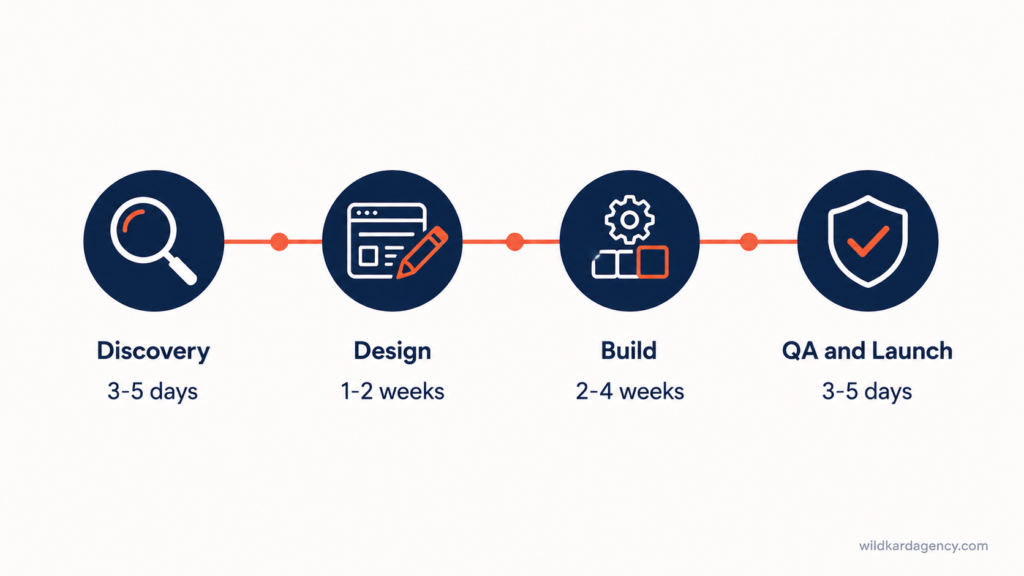
• Discovery and strategy: 3-5 days. Understanding the business, the audience, and what the site needs to do.
• Design: 1-2 weeks. Wireframes and visual design, reviewed and revised before a single page is built.
• Build: 2-4 weeks. Development, content entry, and functionality, running in parallel with copywriting.
• QA and launch: 3-5 days. Speed testing, mobile testing, form testing, and a final review before the site goes live.
Rushing any one of these phases is usually where speed problems, broken mobile layouts, and vague calls to action come from. The businesses that get this right treat the timeline as part of the investment, not an obstacle to it.
A Note for Care Agencies and Social Services Organizations
| This section is for DODD-certified agencies, care organizations, and social services providers.For care agencies, a website carries extra weight. Families evaluating a provider, referral sources, and prospective DSPs all form a first impression from the site before any conversation happens. A slow, dated, or hard-to-navigate site quietly signals the same disorganization families are trying to avoid.WildKard builds care agency websites around clear service explanations, staff credibility, and non-regulated marketing content only. Nothing on the site ever touches individuals receiving care. Our team’s direct DSP and house management background shapes how we structure that content so it reads as credible to families, not generic. |
Frequently Asked Questions
How much does a website cost for a small business?
Most small business websites cost between $1,500 and $15,000, depending on page count, custom design needs, and whether SEO and copywriting are included. DIY builders run under $1,000 a year but rarely include conversion-focused structure. The right budget depends on how much of your lead generation the website needs to carry.
How long does it take to build a small business website?
A five-page brochure site with a freelancer typically takes 4 to 6 weeks. A fully custom, conversion-focused build with strategy and copywriting runs 8 to 12 weeks. Timelines shorten with a template and lengthen with custom functionality or ecommerce.
Is WordPress still the best platform for a small business website in 2026?
For most small businesses, yes. WordPress powers over 40% of all websites and gives full ownership without vendor lock-in. Builders like Squarespace or Wix can work for very simple sites, but WordPress offers more control over SEO, GEO structure, and custom functionality as a business grows.
What is a good website conversion rate?
The 2026 global median is 2.35%. Anything above that is outperforming the average. Small business service sites converting at 3% or higher on form submissions are performing well, and 5% or higher on a focused landing page is excellent. Compare your rate to your own desktop performance, not just an industry average.
Do I need a completely custom website, or can I use a template?
A customized template can work for a straightforward, low-complexity business. A fully custom build makes sense once your website needs to carry real lead generation weight, reflect a specific brand identity, or support content structured for SEO and GEO. The deciding factor is how much the site needs to do, not how big the business is.
| If your website looks fine but is not bringing in enquiries, we will show you exactly what is fixable and what it would cost to fix it. Book a free 15-minute call, no pitch, just a practical conversation about what your website should be doing for you. wildkardagency.com/request |